Uganda Reptile Village: Discover Snakes, Chameleons and Other Fascinating Reptiles
By Ngoni Safaris Uganda
Uganda is famous for its mountain gorillas, chimpanzees, savannah wildlife and beautiful landscapes. However, the country also offers fascinating experiences for visitors interested in reptiles and other lesser-known creatures. One place to explore this side of Uganda’s biodiversity is Uganda Reptile Village, a conservation and educational attraction near Entebbe.
For travellers seeking something different from traditional wildlife safaris, Uganda Reptile Village offers an opportunity to learn about snakes, lizards, tortoises, chameleons and other reptiles while discovering their important role in the natural environment.
What Is Uganda Reptile Village?
Uganda Reptile Village is a reptile conservation and education centre located in the Entebbe area, near the shores of Lake Victoria. It provides visitors with an opportunity to learn about reptiles that live in Uganda and other parts of Africa.
The attraction helps visitors understand the differences between venomous and non-venomous snakes, the behaviour of various reptile species and the importance of protecting wildlife habitats.
For families, students, photographers and wildlife enthusiasts, a visit can be an informative addition to a Uganda holiday.
Reptiles You May Discover at Uganda Reptile Village
Uganda is home to a remarkable diversity of reptiles, from colourful chameleons to powerful monitor lizards. Depending on the animals present at the centre during your visit, you may have the opportunity to learn about several fascinating groups.
1. Snakes of Uganda
Snakes are among the most interesting reptiles found in Uganda. Although some species are venomous, many snakes play an important role in controlling rodents and maintaining ecological balance.
Species found in Uganda include the African rock python, African house snake, puff adders, cobras and various other snakes.
At a reptile education centre, visitors can learn about snake identification, feeding habits, habitats and the differences between venomous and non-venomous species. Learning about these animals can also help reduce unnecessary fear and encourage safer interactions with wildlife.
Important: Never attempt to handle a wild snake. If you encounter one in the wild, keep a safe distance and seek assistance from a trained professional when necessary.
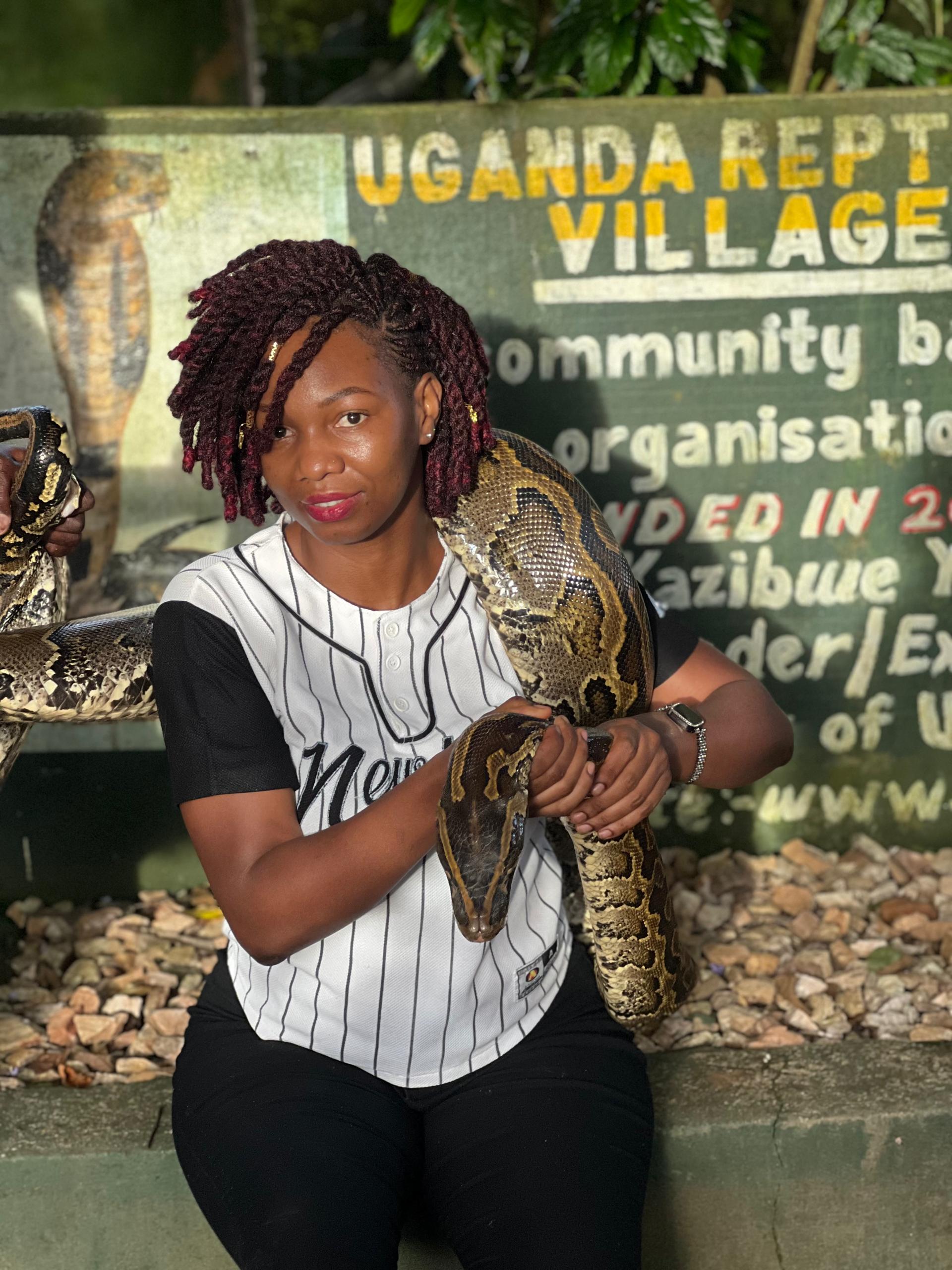
Lady Holding Snake at Reptile Village
2. Chameleons: Masters of Camouflage
Chameleons are among Africa’s most fascinating reptiles. Known for their independently moving eyes, long tongues and specialised feet, these remarkable animals are adapted to life in trees and shrubs.
Some chameleons can change colour in response to factors such as temperature, stress and communication. Their colours and patterns also help them blend into their surroundings.
Uganda’s varied habitats support different chameleon species, making these reptiles an exciting subject for wildlife enthusiasts and nature photographers.
3. Tortoises and Turtles
Tortoises and turtles are known for their protective shells and distinctive movement. Tortoises generally live on land, while turtles are adapted to aquatic or semi-aquatic environments.
Visitors can learn about their diets, life cycles, habitats and the conservation challenges they face. Habitat destruction, illegal wildlife collection and pollution can threaten certain species.
Understanding these challenges helps visitors appreciate why protecting natural habitats is essential for the survival of reptiles.
4. Monitor Lizards
Monitor lizards are among the larger lizards found in Africa. They have strong bodies, long tails, forked tongues and excellent senses for detecting food in their surroundings.
Depending on the species, monitor lizards may live near wetlands, rivers, lakes or other suitable habitats. They feed on a variety of prey and contribute to the ecological balance of their environments.
Their size and behaviour make them particularly interesting animals to study during a guided educational visit.
5. Other Lizards and Small Reptiles
Uganda also supports geckos, skinks and other lizard species. Some are commonly found around buildings and gardens, while others inhabit forests, grasslands, rocky areas and wetlands.
These small reptiles are important parts of the food chain. Many feed on insects and other invertebrates, helping regulate populations of smaller animals.
Conservation and the Importance of Uganda Reptile Village
One of the most important roles of Uganda Reptile Village is helping people understand and appreciate reptiles rather than fearing or killing them unnecessarily. The centre has been described as a place where rescued reptiles receive care and visitors learn about wildlife conservation.
Reptiles face several threats in Uganda, including habitat destruction, wetland degradation, road accidents and persecution caused by fear or misunderstanding.
By educating local communities, schools and international visitors, reptile conservation initiatives can encourage people to protect wildlife and preserve the habitats on which these animals depend.
What to Do at Uganda Reptile Village
A visit to Uganda Reptile Village can include several interesting activities, depending on the facilities and experiences available on the day.
-
Guided reptile tours: Learn about the species at the centre, their behaviour, diets and habitats.
-
Snake education: Discover the differences between venomous and non-venomous snakes and learn how to respond safely to snake encounters.
-
Chameleon observation: Watch these fascinating reptiles and learn about their camouflage and adaptations.
-
Tortoise viewing: Observe tortoises and learn about their feeding habits and life cycles.
-
Nature and wetland exploration: Discover the surrounding environment and learn how wetlands support reptiles, birds and other wildlife.
-
Wildlife photography: Photograph reptiles and other natural features, following the centre’s photography and animal-welfare guidelines.
Guided visits and wetland activities have been described in visitor information about the attraction, although specific activities should be confirmed before travelling.
Where Is Uganda Reptile Village Located?
Uganda Reptile Village is situated in the Bunono area near Entebbe, in central Uganda, a short distance from the Kampala–Entebbe highway. Its location makes it a convenient excursion for visitors staying in Entebbe or travelling between Kampala and Entebbe International Airport.
Visitors should confirm the current access route, opening hours and admission fees before setting off.
Best Time to Visit Uganda Reptile Village
Uganda Reptile Village can be included in an itinerary throughout the year. Uganda’s climate generally allows for year-round travel, although rainfall can affect road conditions and outdoor activities.
A morning or afternoon visit can fit conveniently into a wider Entebbe excursion. Visitors arriving on international flights may prefer to schedule the attraction on a separate day rather than rushing immediately after a long journey.
Attractions to Combine with Uganda Reptile Village
Uganda Reptile Village can be combined with other attractions around Entebbe to create a rewarding day of nature, wildlife and cultural discovery.
Include Uganda Reptile Village in Your Uganda Safari
At Ngoni Safaris Uganda, we believe that discovering Uganda means experiencing more than gorilla trekking and traditional game drives. Small conservation centres, wetlands and community initiatives also provide meaningful opportunities to understand the country’s natural heritage.
Uganda Reptile Village is a worthwhile option for travellers interested in snakes, chameleons, tortoises and reptile conservation. It can be incorporated into a private Entebbe excursion, a short wildlife experience before or after a safari, or a family holiday exploring the region.
Our team can help you plan a personalised Uganda itinerary combining wildlife encounters, cultural experiences, birdwatching and visits to conservation attractions.
Plan your Uganda adventure with Ngoni Safaris Uganda.