Planning an East African safari is exciting, but knowing what to pack can feel overwhelming. Whether you are trekking mountain gorillas in Uganda or Rwanda, watching the Great Migration in Kenya and Tanzania, or relaxing on the beaches of Zanzibar, packing the right items will make your journey safer and more comfortable.
This safari packing guide from Ngoni Safaris Uganda covers the essential clothing, documents, equipment and personal items you should bring for a safari in Uganda, Rwanda, Kenya and Tanzania.
Essential Travel Documents
Keep your important documents together in a secure, waterproof travel wallet. You should carry:
- A passport valid for at least six months beyond your travel dates
- Applicable tourist visas or an East African Tourist Visa
- Yellow fever vaccination certificate
- Travel insurance documents
- Flight tickets and travel itinerary
- Gorilla and chimpanzee permit confirmation, where applicable
- Copies of your passport and other important documents
- Emergency contact information
- Credit or debit cards
- A small amount of cash in US dollars
- Any required medical prescriptions
Bring clean, undamaged US-dollar notes issued in recent years, as older or damaged notes may not be accepted. Small denominations are useful for tips, drinks and personal purchases.
Recommended Safari Clothing
East African safaris are generally relaxed and informal. Comfortable, lightweight clothing in neutral colours is the best choice.
Pack:
- Lightweight, breathable shirts
- Long-sleeved shirts for sun and insect protection
- Comfortable safari trousers
- Convertible trousers or hiking pants
- Shorts for warm afternoons and lodge relaxation
- A warm fleece, sweater or light jacket
- A waterproof rain jacket or poncho
- Comfortable sleepwear
- Underwear and socks
- A wide-brimmed sun hat or cap
- A swimsuit
- Sandals or flip-flops for the lodge
- One smart-casual outfit for dinners or city hotels
Choose colours such as khaki, beige, brown, olive green and grey. Avoid bright colours during wildlife activities. Dark blue and black clothing can attract tsetse flies in some safari areas.
Camouflage clothing should also be avoided because it may be associated with military personnel in certain countries.
Footwear
Your footwear will depend on the activities included in your itinerary. We recommend:
- Comfortable closed walking shoes
- Strong, waterproof hiking boots for gorilla trekking
- Trainers or lightweight walking shoes
- Sandals or flip-flops for relaxing at the lodge
- Gaiters for muddy forest treks
- Several pairs of moisture-wicking socks
Wear your hiking boots before travelling to make sure they are comfortable. New boots can cause painful blisters during gorilla or chimpanzee trekking.
Gorilla and Chimpanzee Trekking Packing List
Gorilla trekking in Uganda or Rwanda can involve steep slopes, thick vegetation, rain and muddy forest trails. For trekking activities, pack:
- Waterproof hiking boots with good grip
- Long hiking trousers
- A long-sleeved shirt
- A lightweight waterproof jacket
- Gardening gloves for protection from thorns and nettles
- Knee-high socks or gaiters
- A small waterproof backpack
- Drinking water
- Energy bars or a packed snack
- Insect repellent
- Sunscreen
- A camera with spare batteries
- A waterproof cover for your camera and backpack
Tuck your trousers into your socks to help protect your ankles from insects and plants. Porters are available at most trekking locations and are highly recommended. Hiring a porter also supports the surrounding communities.
Clothing for Cool Mornings and Evenings
Although East Africa is known for warm weather, early-morning game drives and evenings can be surprisingly cold. Higher-altitude destinations such as Bwindi, Mgahinga, Volcanoes National Park, the Ngorongoro Highlands and the Kenyan highlands can also become chilly.
Bring:
- A warm fleece or sweater
- A lightweight insulated jacket
- A scarf
- Warm socks
- A beanie or warm hat
- Long trousers
Dressing in layers is ideal because temperatures usually rise as the morning progresses.
Safari Equipment and Accessories
The following items will help you get the most out of your safari:
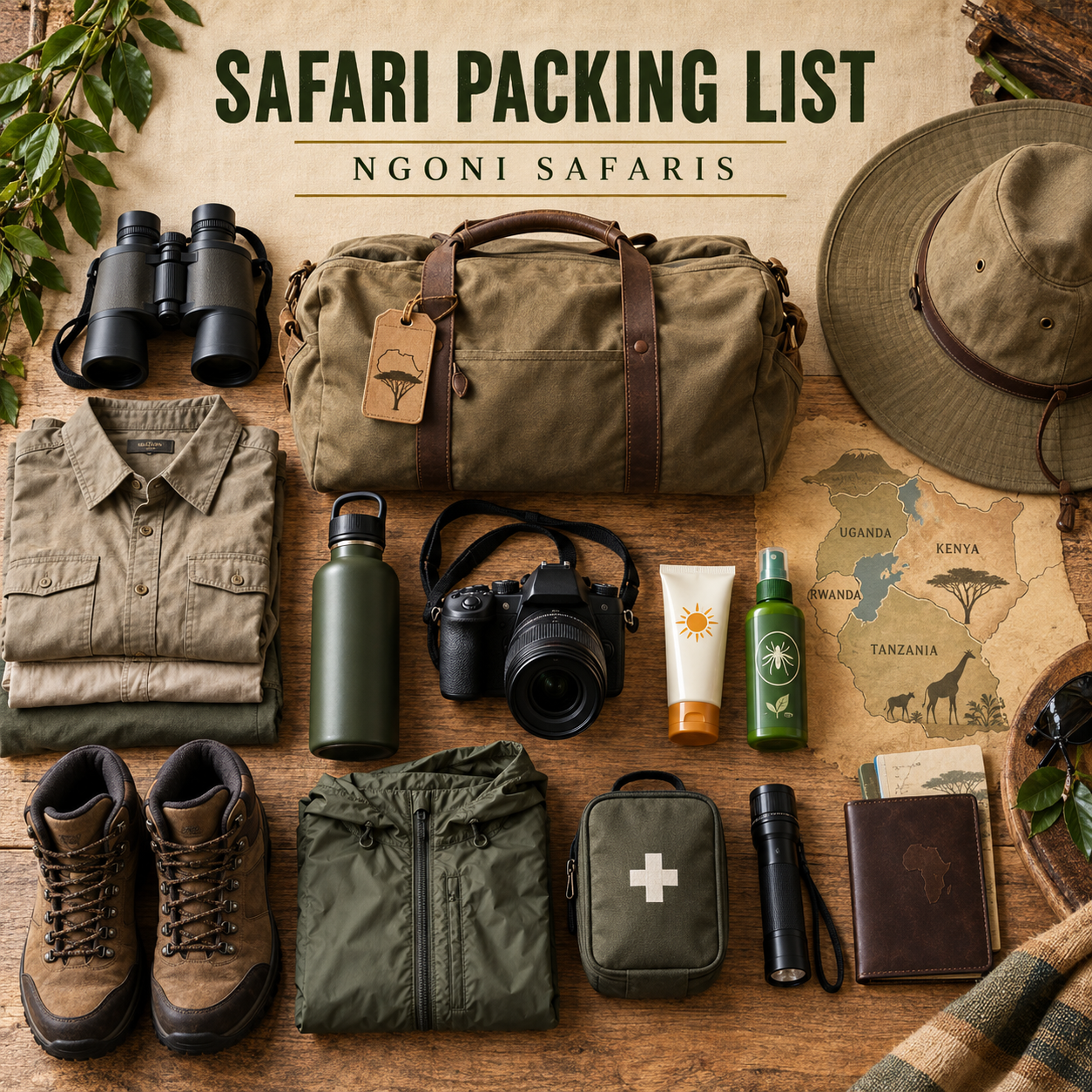
- Binoculars
- Camera and suitable zoom lens
- Spare batteries
- Extra memory cards
- Power bank
- Universal travel adaptor
- Charging cables
- Small flashlight or headlamp
- Sunglasses
- Reusable water bottle
- Waterproof dry bag
- Small daypack
- Luggage locks
- Travel journal and pen
A pair of binoculars is especially useful for viewing distant wildlife and birds. Although your guide may carry binoculars, having your own pair means you will not miss an important sighting.
Toiletries and Personal Items
Most safari lodges provide basic toiletries, but it is advisable to carry your preferred personal products.
Consider packing:
- Toothbrush and toothpaste
- Shampoo and conditioner
- Soap or body wash
- Moisturiser and lip balm
- Deodorant
- Hairbrush or comb
- Wet wipes and tissues
- Hand sanitiser
- Sanitary products
- Razor and shaving products
- Quick-drying towel
- Small laundry detergent
- Contact lenses or spare glasses
Use travel-sized containers whenever possible to reduce the weight of your luggage.
Health and Medical Kit
Consult a qualified travel-health professional before visiting East Africa. Your personal medical kit may include:
- Prescription medication
- Malaria-prevention medication prescribed by your doctor
- Insect repellent containing an effective active ingredient
- Sunscreen with a high SPF
- Pain relievers
- Antihistamines
- Anti-diarrhoea medication
- Oral rehydration salts
- Motion-sickness medication
- Antiseptic cream
- Plasters and blister treatment
- Hand sanitiser
- Personal first-aid supplies
Carry essential medication in your hand luggage and keep it in its original packaging. Bring enough medication for your entire trip, plus a small extra supply in case of travel delays.
Luggage Recommendations
A soft-sided duffel bag is usually more practical than a large hard-shell suitcase, particularly when travelling in safari vehicles or on domestic flights.
We recommend:
- One soft-sided main travel bag
- One small daypack
- A lightweight waterproof bag
- Packing cubes for organisation
- A secure travel wallet
Domestic and charter flights often have strict baggage limits, commonly around 15 kilograms per person, including hand luggage. Restrictions vary by airline and route, so confirm your allowance before departure.
Plastic-Bag Restrictions
Rwanda, Kenya and Tanzania have strict restrictions on certain single-use plastic carrier bags. Avoid packing ordinary shopping bags, plastic carrier bags and other prohibited disposable plastics.
Reusable toiletry bags, durable zip-style storage bags for personal items and manufacturer-sealed packaging may be treated differently, but regulations can change. Check the latest rules before travelling and use reusable alternatives whenever possible.
What to Pack for Zanzibar or the Kenyan Coast
If your safari includes Zanzibar, Diani, Mombasa or another coastal destination, add:
- Lightweight summer clothing
- Swimwear
- Beach sandals
- Reef-safe sunscreen
- Sunglasses
- Sun hat
- Light cover-up
- Waterproof phone pouch
- Smart-casual evening clothing
Zanzibar has a predominantly Muslim culture. Dress modestly when visiting towns, villages and religious sites. Shoulders and knees should be covered outside beach resorts.
Items to Leave at Home
Avoid packing unnecessary or restricted items, including:
- Heavy suitcases
- Excessive jewellery
- Large amounts of cash
- Bright safari clothing
- Camouflage clothing
- Strong perfumes
- Expensive items you will not use
- Drones without the required permits
- Single-use plastic carrier bags
- Unnecessary electronic equipment
Drone use is regulated across East Africa and generally requires advance authorisation. Never bring or operate a drone without confirming the relevant national and park regulations.
Safari Packing Tips
Pack light and choose clothes that can be layered and worn more than once. Many safari lodges provide laundry services, although some may not wash underwear for cultural reasons.
Keep essential documents, medication, valuables and one change of clothing in your hand luggage. If your checked bag is delayed, you will still have the necessities for the first day of your journey.
Before departure, check the weather conditions for the destinations on your itinerary. Uganda and Rwanda can receive rain throughout the year, while temperatures in Kenya and Tanzania vary significantly between the coast, savannah and highland areas.
Final Safari Packing Checklist
Before leaving home, confirm that you have packed:
- Passport and visas
- Yellow fever certificate
- Travel insurance
- Safari itinerary and permit confirmations
- Neutral-coloured clothing
- Warm layers
- Waterproof jacket
- Comfortable walking shoes
- Hiking boots for trekking
- Hat and sunglasses
- Sunscreen and insect repellent
- Prescription medication
- Camera and binoculars
- Chargers and power bank
- Universal adaptor
- Reusable water bottle
- Small daypack
- Cash and bank cards
Plan Your East African Safari with Ngoni Safaris Uganda
Packing correctly allows you to concentrate on what truly matters: enjoying East Africa’s wildlife, landscapes, cultures and unforgettable adventures.
Ngoni Safaris Uganda organises tailor-made and group safaris across Uganda, Rwanda, Kenya and Tanzania. Our experienced team can arrange gorilla trekking, chimpanzee tracking, wildlife game drives, cultural experiences, mountain adventures and relaxing beach extensions.
Contact Ngoni Safaris Uganda today, and let us create an unforgettable East African safari designed around your interests, travel dates and budget.
Warning: Trying to access array offset on null in /home/nsafarisug/public_html/wp-content/themes/rehub-theme/functions/review_functions.php on line 499
Warning: Trying to access array offset on null in /home/nsafarisug/public_html/wp-content/themes/rehub-theme/functions/review_functions.php on line 503