Okapis in the Democratic Republic of Congo: Discover Africa’s Mysterious Forest Giraffe
By Ngoni Safaris | Wildlife, Nature and Congo Travel Guide Discover Okapis in Congo: Facts, Habitat and Conservation with Ngoni Safaris in this comprehensive wildlife and travel guide.
Deep in the dense tropical rainforests of the Democratic Republic of Congo (DRC) lives one of Africa’s most unusual and fascinating animals: the okapi. Often called the forest giraffe or Congo giraffe, this rare mammal has the dark body of a forest-dwelling antelope, distinctive white-striped legs resembling those of a zebra, and a long, flexible tongue. Despite its unusual appearance, the okapi is the closest living relative of the giraffe.
For wildlife lovers, conservation enthusiasts and adventurous travellers, the okapi represents the extraordinary biodiversity hidden within the forests of Central Africa. At Ngoni Safaris, we celebrate Africa’s remarkable wildlife and encourage responsible tourism that supports conservation and protects endangered species for future generations.
What Is an Okapi?
The okapi (Okapia johnstoni) is a rare forest mammal native to the Democratic Republic of Congo. Although its striped legs may make it look like a zebra, it belongs to the giraffe family, Giraffidae.
Its scientific discovery by Western scientists came in the early 20th century, although local communities had known about the animal for generations. The okapi was formally described in 1901 by British zoologist Sir Harry Johnston, giving it an important place in the history of African wildlife discoveries.
The okapi is a shy, solitary animal that relies on its excellent hearing, keen sense of smell and natural camouflage to survive in the thick rainforest. Its dark reddish-brown coat blends into the forest shadows, while the bright markings on its hindquarters and legs help researchers and observers identify this remarkable species.
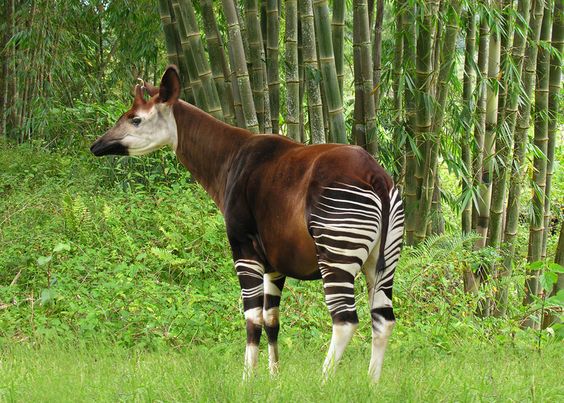
Okapi in Congo
Where Do Okapis Live in Congo?
The okapi is endemic to the Democratic Republic of Congo, meaning that its natural range is restricted to this country. It inhabits the dense tropical forests of the northeastern and central parts of the country, particularly the Ituri Rainforest.
One of the most important protected areas for the species is the Okapi Wildlife Reserve, located in the Ituri Forest in northeastern DRC. This vast protected landscape contains rich rainforest ecosystems, rivers, forest clearings and exceptional biodiversity.
The reserve is recognised as a UNESCO World Heritage Site and provides habitat for many other animals, including forest elephants, chimpanzees and numerous bird species. It also supports Indigenous communities, including Mbuti forest peoples, whose knowledge and relationship with the forest are an important part of the region’s cultural heritage.
The okapi’s survival depends on maintaining healthy, connected forest habitats and protecting them from illegal hunting, mining and deforestation.
Why Does the Okapi Look Like a Zebra and a Giraffe?
The okapi’s appearance is one of its most distinctive features. Its body is covered in dark, velvety fur, while its legs and hindquarters have bold white or cream-coloured stripes.
Despite these zebra-like markings, the okapi is not related to zebras. Its closest living relative is the giraffe.
Scientists believe the stripes help individual okapis recognise one another in dense vegetation and may assist calves in following their mothers through the forest. Their dark coats provide camouflage in the shadowy rainforest environment.
Other fascinating physical features include:
- Long, flexible tongue: The okapi uses its long tongue to grasp leaves, buds and other vegetation.
- Large ears: Its sensitive hearing helps detect potential danger in the forest.
- Strong legs: These allow it to move through thick undergrowth.
- Ossicones in males: Male okapis have short, skin-covered horn-like structures on their heads, unlike the prominent ossicones of giraffes.
- Excellent camouflage: Its colouring helps it remain difficult to spot among forest vegetation.
These adaptations make the okapi especially suited to life in one of Africa’s most complex rainforest ecosystems.
What Do Okapis Eat?
Okapis are herbivores, meaning they feed on plant material. Their diet consists mainly of leaves, shoots, buds, ferns, fruits and other vegetation found in the rainforest.
Their long tongues allow them to pull leaves from branches and reach food that other forest animals may find difficult to access. They also consume certain plants that provide minerals and other nutrients.
By feeding on a variety of vegetation, okapis contribute to the natural functioning of the rainforest ecosystem. Like other forest herbivores, they form part of the ecological relationships that help sustain the biodiversity of the Ituri Forest.
Okapi Behaviour and Reproduction
Okapis are generally solitary and secretive animals. Adults usually occupy individual home ranges and communicate through scent marking and other subtle signals. They are most often active during the day, although their behaviour can vary with environmental conditions and disturbance.
Female okapis give birth to a single calf after a gestation period of approximately 14–16 months. The newborn calf remains hidden in dense vegetation during its early life, helping reduce the risk of predation.
Young okapis depend on their mothers for nourishment and protection. Their survival is closely linked to the availability of undisturbed forest habitat.
Because okapis are naturally elusive, seeing one in the wild is exceptionally difficult. Even experienced wildlife researchers may spend considerable time studying their tracks, feeding signs and other evidence before encountering an individual.
Is the Okapi an Endangered Animal?
Yes. The okapi is classified as Endangered on the International Union for Conservation of Nature (IUCN) Red List.
Its population is threatened by several factors, including:
- Habitat destruction: Forest clearing and deforestation reduce the availability of suitable habitat.
- Illegal hunting: Okapis are vulnerable to snares and other hunting practices.
- Mining activities: Unregulated mining can damage forests and bring increased pressure on wildlife.
- Insecurity: Armed conflict and instability in parts of eastern DRC make conservation work and wildlife monitoring more difficult.
- Infrastructure development: Roads and other developments can fragment forest habitats and increase human access to previously remote areas.
Protecting the okapi requires long-term conservation efforts, effective management of protected areas, support for local communities and action against illegal wildlife exploitation.
The Okapi Wildlife Reserve: A Haven for Rare Wildlife
The Okapi Wildlife Reserve is one of the most important conservation areas for this extraordinary animal. Established in 1992, the reserve protects approximately 13,700 square kilometres of tropical forest in northeastern Democratic Republic of Congo.
In 1996, it was inscribed on the UNESCO World Heritage List because of its outstanding biodiversity and ecological importance. It was subsequently placed on the List of World Heritage in Danger in 1997, reflecting the serious threats facing the area.
The reserve protects not only the okapi but also forest elephants, primates, birds and countless other rainforest species. Its rivers and forest habitats sustain complex ecological systems that are important for both wildlife and nearby communities.
Conservation in the reserve depends on cooperation among wildlife authorities, conservation organisations, Indigenous peoples and local communities. Protecting the forest also helps preserve the cultural traditions and livelihoods of people who depend on it.
Can Tourists See Okapis in Congo?
Okapi sightings in the wild are rare because these animals are naturally shy and inhabit dense, remote forests. Unlike gorillas, which are visited on organised trekking experiences in certain protected areas, okapis are not generally observed through routine wildlife-viewing excursions.
Visitors interested in learning about okapis should investigate conservation-focused visits and authorised activities in the region. However, access to the Okapi Wildlife Reserve may be restricted by security conditions, conservation regulations and local arrangements. Travellers should confirm current conditions with reliable authorities and experienced local operators before planning a visit.
For visitors exploring Central Africa, the best wildlife experience is one that respects animal welfare, supports conservation and prioritises the safety of local communities and travellers.
Okapi vs. Giraffe: What Is the Difference?
| Feature | Okapi | Giraffe |
|---|---|---|
| Natural habitat | Tropical rainforest | Savannas, woodlands and open habitats |
| Geographic range | Democratic Republic of Congo | Several African countries |
| Appearance | Dark coat with striped legs | Spotted coat and very long neck |
| Neck | Relatively short | Extremely long |
| Social behaviour | Generally solitary | Often lives in loose social groups |
| Conservation status | Endangered | Varies by species and population |
Although they look very different, both animals belong to the giraffe family. Their differences reflect adaptations to distinct habitats and ways of life.
Interesting Facts About Okapis
Here are some fascinating facts about this unusual African mammal:
- The okapi is a close relative of the giraffe. Despite its appearance, it is not a type of zebra.
- It is native to only one country. The okapi’s natural range is restricted to the Democratic Republic of Congo.
- Its tongue is remarkably long. It can use it to reach leaves and groom parts of its own body.
- It has excellent hearing. This is especially useful in thick vegetation where visibility is limited.
- It is difficult to observe in the wild. Its secretive behaviour and rainforest habitat make sightings uncommon.
- It plays a role in rainforest biodiversity. As a herbivore, it forms part of the intricate ecological relationships within the forest.
- It has cultural significance. The animal is an important symbol of Congo’s unique natural heritage and conservation efforts.
Best Time to Explore Congo’s Rainforests
The best time for a rainforest visit depends on the destination, rainfall, road conditions and the activities planned. The Ituri Forest experiences tropical conditions throughout the year, and rain can affect travel at any time.
Before travelling, visitors should:
- Check official security advisories for the specific destination.
- Confirm whether protected areas are open to visitors.
- Arrange authorised local guides and transport.
- Obtain appropriate travel documents and follow current health guidance.
- Choose responsible operators who respect wildlife and local communities.
Because the Okapi Wildlife Reserve is in a remote part of northeastern Congo, travellers should not assume that standard safari arrangements in Uganda or Rwanda can be extended to this region without additional planning.
How Ngoni Safaris Promotes African Wildlife Conservation
At Ngoni Safaris, we believe Africa’s wildlife heritage deserves protection. From the mountain gorillas of Uganda and Rwanda to the elephants of Murchison Falls National Park and the rare okapis of Congo, every species contributes to the continent’s extraordinary natural diversity.
Responsible tourism can help create awareness, encourage conservation and support communities whose livelihoods are connected to healthy ecosystems.
Our commitment is to promote wildlife education, responsible travel and respect for Africa’s natural treasures. Travellers interested in discovering Uganda’s wildlife can explore our safari experiences, including gorilla trekking, chimpanzee tracking, savannah game drives, birdwatching and nature tours.
While the okapi is not a typical attraction on a Ugandan safari, learning about this rare mammal offers a wonderful opportunity to appreciate the ecological connections between Central and East Africa.
Plan Your African Wildlife Adventure with Ngoni Safaris
Discover Africa’s remarkable landscapes and wildlife with Ngoni Safaris Uganda. Whether you dream of trekking to see mountain gorillas, tracking chimpanzees in tropical forests or spotting elephants and lions on a savannah safari, we can help you explore Uganda’s natural wonders.
Contact Ngoni Safaris Uganda