Best National Parks in Tanzania: Top Safari Destinations for an Unforgettable African Adventure
By Ngoni Safaris | Tanzania Safari Guide
Tanzania is one of Africa’s most spectacular safari destinations, offering vast savannah plains, dramatic volcanic landscapes, ancient baobab trees, tropical forests, beautiful lakes, and some of the world’s most extraordinary wildlife encounters. From the famous Great Wildebeest Migration in the Serengeti to elephant herds in Tarangire and the remarkable landscapes of the Ngorongoro Conservation Area, Tanzania offers unforgettable experiences for every wildlife enthusiast.
For travelers planning an African safari, choosing the best national parks in Tanzania is an important step toward creating the perfect holiday. Whether you dream of seeing the Big Five, photographing lions and cheetahs, watching thousands of wildebeest cross the plains, or exploring quieter wilderness areas, Tanzania has a safari destination to match your interests.
At Ngoni Safaris, we help travelers plan memorable East African adventures, combining outstanding wildlife destinations, comfortable accommodation, experienced safari guides, and personalized itineraries.
1. Serengeti National Park – Best for the Great Wildebeest Migration
The Serengeti National Park is widely regarded as one of Africa’s greatest wildlife destinations. Located in northern Tanzania, this iconic park features endless golden plains, rocky kopjes, river valleys, and diverse habitats supporting abundant wildlife.
Its most famous attraction is the Great Wildebeest Migration, during which enormous herds of wildebeest and zebras move across the Serengeti ecosystem in search of fresh grazing and water. Predators such as lions, leopards, cheetahs, hyenas, and crocodiles make this natural spectacle even more dramatic.
Top experiences in Serengeti National Park
- Witnessing the Great Wildebeest Migration at the appropriate time of year.
- Searching for lions, cheetahs, leopards, elephants, and buffaloes.
- Enjoying sunrise and sunset game drives across the plains.
- Taking an optional hot-air balloon safari.
- Photographing wildlife and the spectacular African landscape.
Best time to visit: June to October is generally excellent for dry-season wildlife viewing, while January and February are important months for wildebeest calving in the southern Serengeti. Migration movements vary with rainfall, so the best location depends on your travel dates.
Serengeti is an excellent choice for couples, families, photographers, honeymooners, and travelers seeking a classic African safari.
Serengeti national park
2. Ngorongoro Conservation Area – Best for Big Five Wildlife Viewing
The Ngorongoro Conservation Area is one of Tanzania’s most remarkable natural destinations. Its main attraction is the Ngorongoro Crater, a vast volcanic caldera containing grasslands, woodland, wetlands, and a soda lake.
The crater supports a remarkable concentration of wildlife within a relatively compact area, making it a highlight of many northern Tanzania safari itineraries.
Visitors may encounter lions, elephants, buffaloes, zebras, wildebeest, hippos, hyenas, and, with luck, the endangered black rhinoceros.
Top experiences at Ngorongoro
- Descending into the crater for a wildlife-viewing excursion.
- Searching for the Big Five.
- Enjoying spectacular views from the crater rim.
- Exploring the area’s rich landscapes and cultural heritage.
- Combining the crater with Serengeti and Tarangire.
Best time to visit: Wildlife viewing is rewarding throughout the year, with June to October often offering favorable dry-season conditions.
Although Ngorongoro is technically a conservation area rather than a national park, it deserves a place on any list of Tanzania’s best safari destinations.
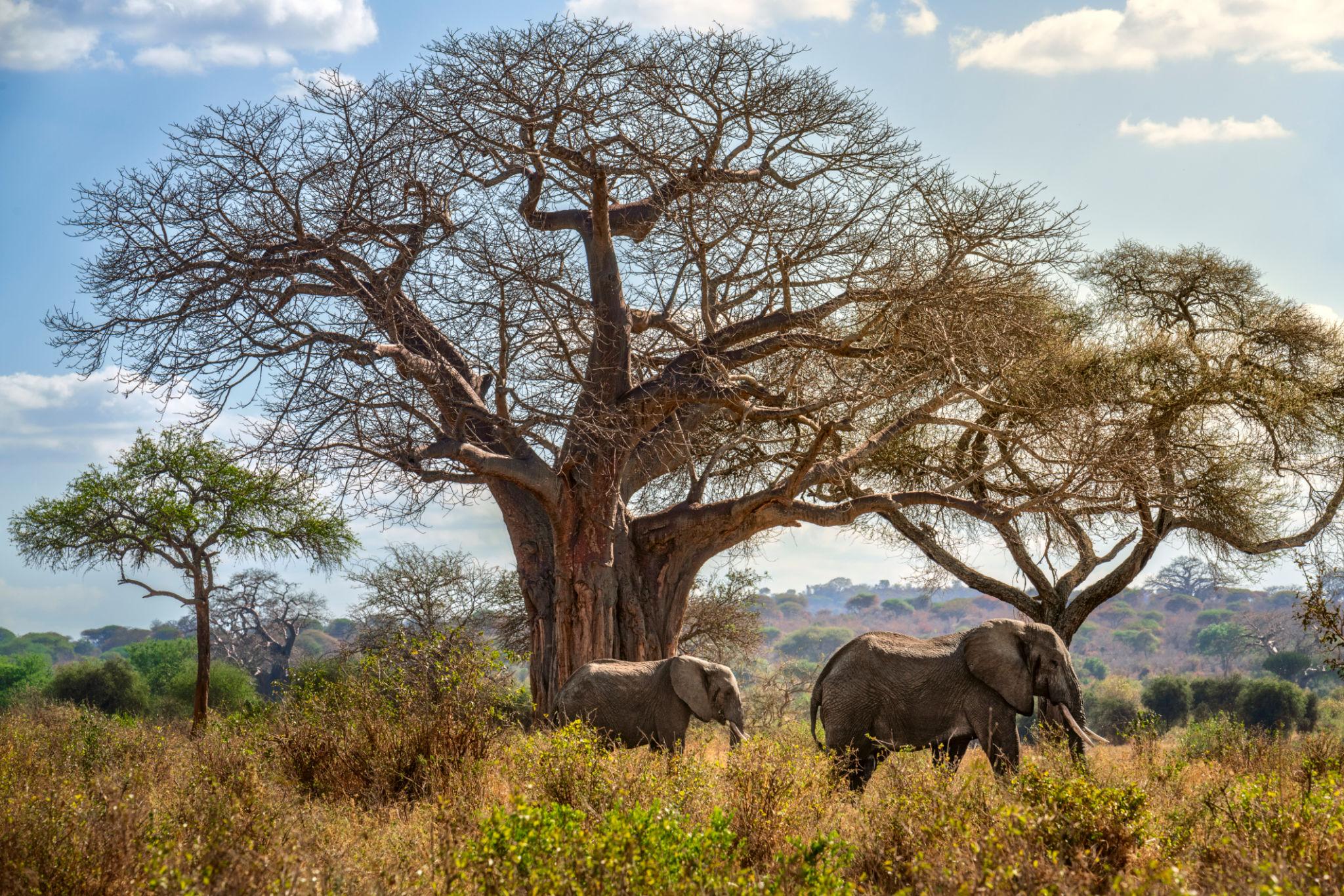
3. Tarangire National Park – Best for Elephants and Baobab Trees
Tarangire National Park is a beautiful wildlife destination known for its impressive elephant herds, ancient baobab trees, seasonal swamps, and open savannah landscapes.
During the dry season, wildlife gathers around the Tarangire River, which provides an essential source of water. Visitors may see large numbers of elephants alongside zebras, wildebeest, giraffes, buffaloes, impalas, and various predators.
The park is also an excellent destination for birdwatching, with a wide variety of resident and seasonal species.
Top experiences in Tarangire
- Observing elephants in their natural habitat.
- Photographing giant baobab trees against the African sky.
- Searching for lions and leopards.
- Enjoying game drives through woodland and grassland.
- Spotting colorful birds and other smaller wildlife.
Best time to visit: June to October is particularly rewarding for wildlife viewing as animals concentrate near available water sources.
Tarangire is ideal for travelers who appreciate elephants, photography, scenic landscapes, and a less hurried safari experience. It combines naturally with Lake Manyara, Ngorongoro, and Serengeti.
4. Lake Manyara National Park – Best for Birdwatching and Scenic Diversity
Lake Manyara National Park offers a striking contrast to Tanzania’s open savannah parks. Situated beneath the Great Rift Valley escarpment, it features groundwater forests, acacia woodland, open grassland, and the shallow alkaline waters of Lake Manyara.
The park is famous for its birdlife and is often associated with tree-climbing lions, although sightings are never guaranteed.
Visitors may also encounter elephants, giraffes, baboons, hippos, zebras, and numerous waterbirds, depending on the season and location.
Top experiences at Lake Manyara
- Birdwatching along the lake and in forest habitats.
- Looking for tree-climbing lions.
- Observing elephants and large troops of baboons.
- Exploring the lush groundwater forest.
- Photographing the Rift Valley escarpment and lake scenery.
Best time to visit: June to October often provides favorable conditions for general wildlife viewing, while wetter months can be rewarding for birdwatching.
Lake Manyara is a good addition to a northern Tanzania safari, particularly for visitors who enjoy diverse landscapes and birdlife.
5. Nyerere National Park – Best for Boat Safaris and Remote Wilderness
Nyerere National Park, part of the wider historic Selous landscape, is one of Tanzania’s great southern wilderness destinations. Its diverse ecosystems include the Rufiji River, lakes, floodplains, woodland, and expansive natural habitats.
Unlike a traditional safari focused entirely on driving, Nyerere offers opportunities to experience wildlife from different perspectives.
Top experiences in Nyerere
- Taking a guided boat safari along the Rufiji River.
- Watching hippos and crocodiles in the water.
- Searching for elephants, lions, giraffes, and buffaloes.
- Looking for African wild dogs.
- Enjoying authorized guided walking safaris.
- Photographing birds and river landscapes.
Best time to visit: June to October is generally favored for dry-season wildlife viewing and many safari activities.
Nyerere is particularly suitable for travelers looking for a quieter, varied safari that combines traditional game drives with river-based experiences. Flights from Dar es Salaam can make access more convenient.
6. Ruaha National Park – Best for an Uncrowded Wildlife Safari
Ruaha National Park is one of Tanzania’s most impressive wilderness areas. Located in the south-central part of the country, it features rugged terrain, baobab-studded landscapes, seasonal rivers, and extensive wildlife habitats.
The Great Ruaha River is an important feature of the park, attracting animals during the dry season. Ruaha is particularly well known for elephants, large buffalo herds, lions, leopards, and excellent birdlife.
Top experiences in Ruaha
- Exploring vast landscapes on guided game drives.
- Searching for lions and other large predators.
- Observing elephants around rivers and water sources.
- Enjoying authorized walking safaris.
- Photographing baobabs, birds, and dramatic scenery.
Best time to visit: June to October is generally excellent for wildlife viewing as animals become easier to locate around remaining water sources.
Ruaha is a wonderful choice for repeat safari travelers, photographers, and visitors who prefer a more remote atmosphere. Its distance from the main northern circuit means that domestic flights may be useful when planning a shorter trip.
7. Mikumi National Park – Best for a Convenient Southern Tanzania Safari
Mikumi National Park is an accessible wildlife destination in southern Tanzania, with open grasslands, wooded hills, and plains that support a variety of wildlife.
The Mkata Floodplain is one of its best-known areas for game viewing. Visitors may see giraffes, zebras, wildebeest, elephants, buffaloes, lions, and numerous antelope species.
Top experiences in Mikumi
- Enjoying game drives across open plains.
- Searching for lions and elephants.
- Photographing giraffes and zebras.
- Observing birds and seasonal wildlife activity.
- Combining a safari with time in Dar es Salaam or other southern destinations.
Best time to visit: June to October is often recommended for dry-season game viewing.
Mikumi is suitable for travelers with limited time who want to experience a Tanzanian safari without committing to a longer northern circuit itinerary.
8. Mahale Mountains National Park – Best for Wild Chimpanzee Trekking
Mahale Mountains National Park offers a completely different safari experience on the shores of Lake Tanganyika in western Tanzania.
Its forested mountains, clear lake waters, and remote setting make it one of the country’s most distinctive nature destinations. Mahale is especially renowned for opportunities to trek and observe wild chimpanzees with authorized guides.
Top experiences in Mahale
- Trekking to observe chimpanzees in their natural habitat.
- Exploring forest trails with experienced guides.
- Enjoying views of Lake Tanganyika.
- Photographing tropical forest wildlife.
- Relaxing beside one of Africa’s great freshwater lakes.
Best time to visit: The drier months, commonly May to October, are often favored for trekking conditions, although local conditions vary.
Mahale is ideal for adventurous travelers, primate enthusiasts, and visitors seeking a specialist wildlife experience beyond the classic savannah safari.
9. Katavi National Park – Best for Remote African Wilderness
Katavi National Park lies in western Tanzania and is known for its remote location, expansive floodplains, woodland, and seasonal concentrations of wildlife.
During the dry season, shrinking water sources can attract large groups of hippos, crocodiles, buffaloes, and other animals. Its relative remoteness appeals to visitors who want to explore a less-visited safari destination.
Top experiences in Katavi
- Searching for hippos and crocodiles around seasonal water sources.
- Observing buffalo herds and other large mammals.
- Enjoying game drives through open floodplains.
- Photographing dramatic wilderness landscapes.
- Experiencing a remote safari away from the busiest routes.
Best time to visit: July to October is often particularly rewarding for dry-season wildlife viewing.
Katavi is best suited to experienced safari travelers and adventurous visitors who have enough time and budget for a remote destination.
10. Kilimanjaro National Park – Best for Mountain Trekking
Kilimanjaro National Park protects Mount Kilimanjaro, Africa’s highest mountain, which rises above the surrounding plains and reaches approximately 5,895 metres above sea level.
Unlike the traditional wildlife parks, Kilimanjaro is primarily a destination for trekking, mountain scenery, and high-altitude adventure.
Climbers pass through different vegetation zones, from cultivated foothills and montane forest to alpine landscapes and the mountain’s high summit region.
Top experiences at Kilimanjaro
- Trekking toward Uhuru Peak with an authorized mountain team.
- Exploring montane forest and alpine scenery.
- Photographing the mountain and its changing landscapes.
- Learning about the mountain’s natural environment.
- Combining a climb with a wildlife safari in northern Tanzania.
Best time to visit: January to March and June to October are commonly favored trekking periods, although weather can change rapidly at altitude.
Climbing Kilimanjaro requires proper preparation, a suitable acclimatization plan, and professional support.
Which National Parks in Tanzania Should You Visit?
The best park depends on your interests, travel dates, budget, and the amount of time available.
| Your safari interest | Recommended destination |
|---|---|
| Great Wildebeest Migration | Serengeti National Park |
| Big Five wildlife viewing | Ngorongoro Conservation Area |
| Elephants and baobab trees | Tarangire National Park |
| Birds and varied landscapes | Lake Manyara National Park |
| Boat safaris and wild dogs | Nyerere National Park |
| Remote wildlife and walking safaris | Ruaha National Park |
| A shorter southern safari | Mikumi National Park |
| Wild chimpanzee trekking | Mahale Mountains National Park |
| Remote wilderness exploration | Katavi National Park |
| Mountain climbing | Kilimanjaro National Park |
Best Time to Visit Tanzania for a Safari
Tanzania can be visited throughout the year, but the best travel period depends on the destinations you want to explore.
June to October: This is generally a popular dry-season period for wildlife viewing across many parks. Animals are often easier to spot around water sources, and vegetation is less dense.
January to February: These months can be excellent for visiting the southern Serengeti during the wildebeest calving season, depending on rainfall and grazing conditions.
March to May: The long rains can bring lush landscapes, excellent photographic opportunities, and rewarding birdwatching. Some remote roads and safari logistics may be more challenging.
November to December: The short rains can refresh the landscape, and wildlife viewing remains possible in many destinations. Migration locations depend on rainfall patterns.
Travelers hoping to witness river crossings during the Great Migration should plan carefully. The crossings are natural events and cannot be guaranteed on a particular day.
Suggested Tanzania Safari Itineraries
Ngoni Safaris can help travelers combine Tanzania’s major wildlife destinations into a well-planned holiday.
5-Day Northern Tanzania Safari
- Day 1: Arrive in Arusha.
- Day 2: Game drive in Tarangire National Park.
- Day 3: Travel to Serengeti National Park with wildlife viewing en route.
- Day 4: Full-day Serengeti game drive.
- Day 5: Visit Ngorongoro Crater before continuing to your onward destination, subject to flight and road schedules.
7-Day Tanzania Wildlife Safari
- Day 1: Arrive in Arusha.
- Day 2: Explore Tarangire National Park.
- Day 3: Travel to the Serengeti.
- Day 4: Full-day game viewing in the Serengeti.
- Day 5: Continue exploring the Serengeti.
- Day 6: Travel toward the Ngorongoro Conservation Area.
- Day 7: Enjoy a crater safari before departure or onward travel.
Southern Tanzania Safari
A southern circuit can combine Nyerere and Ruaha, with flights or road transfers arranged according to your schedule. This option is particularly attractive for travelers seeking remote wilderness, boat safaris, walking experiences, and fewer crowds.
These are sample outlines; the final itinerary should account for park distances, lodge locations, seasonal wildlife movements, flights, and travel dates.
Where to Stay on a Tanzania Safari
Tanzania offers accommodation options ranging from comfortable budget camps and midrange safari lodges to luxury tented camps and exclusive wilderness retreats.
The best accommodation depends on your budget, preferred comfort level, and the wildlife areas you want to visit. Staying in or close to your chosen park can reduce unnecessary driving and allow more time for early-morning and late-afternoon game drives.
Ngoni Safaris can help travelers select suitable accommodation and coordinate transport, activities, park visits, and other safari arrangements.
Why Book Your African Safari with Ngoni Safaris?
At Ngoni Safaris, we believe every African safari should be carefully planned around the traveler’s interests and expectations.
Our approach focuses on:
- Personalized safari itineraries.
- Wildlife experiences guided by knowledgeable professionals.
- Suitable accommodation for different budgets.
- Private safari arrangements where requested.
- Practical advice on travel seasons and destination selection.
- Opportunities to combine Tanzania with a wider East African holiday, subject to logistics.
Whether you are planning a honeymoon, family holiday, photography trip, luxury safari, or adventure-filled wildlife expedition, choosing the right destinations can make all the difference.
Plan Your Tanzania Safari with Ngoni Safaris
Tanzania is home to some of Africa’s most extraordinary natural wonders. From the immense herds of the Serengeti and the elephant-rich landscapes of Tarangire to the remote wilderness of Ruaha and the chimpanzee forests of Mahale, every destination offers a different perspective on Africa’s natural heritage.
The best Tanzania safari is the one that matches your interests, travel dates, budget, and preferred pace.
Contact Ngoni Safaris to start planning your Tanzania safari.