Investing in Eco Safari Lodges in Uganda: Why Ngoni Safaris Is the Right Partner for Investors
Are you looking for eco-lodge investment opportunities in Uganda? Uganda offers exciting opportunities for investors interested in sustainable tourism, luxury safari accommodation, eco-friendly resorts, and nature-based hospitality. With its mountain gorillas, savannah wildlife, tropical forests, lakes, and diverse landscapes, Uganda has the potential to support innovative eco-safari lodge projects that combine responsible tourism with long-term business opportunities.
For investors seeking to establish or expand an eco-safari lodge in Uganda, Ngoni Safaris Uganda offers a potential local tourism partner to help explore suitable locations, understand safari market demand, develop tourism concepts, and connect accommodation projects with safari experiences.
Whether you are planning a luxury eco-lodge, a mid-range safari camp, a boutique wilderness retreat, or a community-based tourism property, the right local partner can help turn your investment concept into a practical business opportunity.
Why Invest in Eco Safari Lodges in Uganda?
Uganda is an attractive destination to explore for eco-lodge investment because of its combination of wildlife, primate experiences, protected landscapes, cultural attractions, and opportunities for nature-based travel.
Travellers increasingly seek accommodation that offers comfort, authentic experiences, beautiful surroundings, and responsible environmental practices. Eco-safari lodges can respond to these preferences while supporting local communities and protecting the natural environment.
Potential investment opportunities include:
- Luxury eco-lodges: Premium accommodation featuring private cottages, personalised service, nature views, and high-quality dining.
- Mid-range safari lodges: Comfortable, environmentally conscious accommodation designed for couples, families, small groups, and organised safaris.
- Eco-friendly tented camps: Canvas accommodation that combines wilderness experiences with carefully planned environmental management.
- Gorilla trekking lodges: Properties serving visitors to Uganda’s gorilla trekking destinations.
- Wildlife safari lodges: Accommodation close to national parks and wildlife viewing routes.
- Lake and forest retreats: Nature-based properties offering relaxation, birdwatching, guided walks, and cultural experiences.
- Community tourism lodges: Projects that create employment, support local enterprises, and provide meaningful cultural experiences.
The suitability of each opportunity depends on location, land rights, access, infrastructure, development costs, conservation requirements, and the demand from the intended customer market.
Best Locations to Explore for Eco-Lodge Investment in Uganda
Choosing the right location is one of the most important decisions when investing in an eco-safari lodge. Investors should evaluate tourism demand, access roads, utilities, environmental sensitivity, nearby attractions, and competing accommodation before committing capital.
1. Bwindi Impenetrable National Park
Bwindi is internationally recognised for mountain gorilla trekking and its exceptional rainforest biodiversity. Accommodation businesses serving visitors to the park can explore opportunities in boutique lodges, forest cottages, luxury retreats, and comfortable mid-range properties.
An eco-lodge in the Bwindi region could focus on forest views, responsible water use, locally sourced food, community partnerships, and accommodation designed to complement the natural environment.
Investors should carefully assess the specific location, access to authorised trekking sectors, land ownership, and applicable conservation and development requirements.
2. Queen Elizabeth National Park
Queen Elizabeth National Park offers opportunities to explore safari accommodation concepts serving visitors interested in wildlife, boat safaris, birdwatching, and diverse landscapes.
Potential concepts include eco-friendly cottages, tented camps, family safari lodges, and properties designed for travellers exploring the park and neighbouring attractions.
Location-specific research is essential to understand access, seasonality, competition, environmental restrictions, and the expected occupancy needed to support the business.
3. Murchison Falls National Park
Murchison Falls is a major destination for wildlife viewing, Nile boat trips, and visits to the dramatic Murchison Falls.
Investors may explore safari lodges, nature-oriented resorts, boutique cottages, and tented accommodation designed for travellers seeking a combination of wildlife experiences and comfortable stays.
A successful project should consider road access, reliable utilities, appropriate waste management, operating costs, and the distance from key visitor activities.
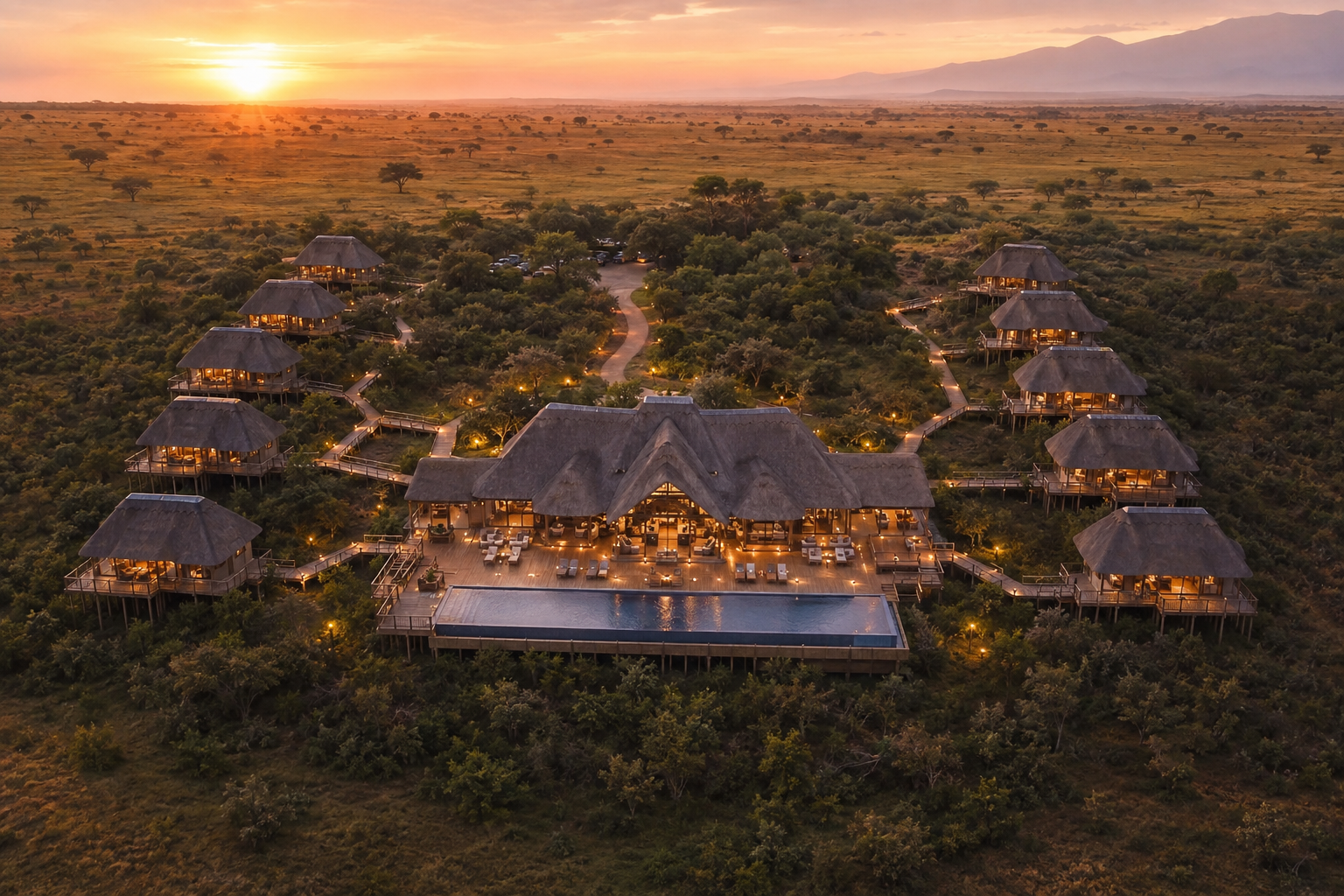
Simple Luxury Lodge Hotel Design
4. Kibale Forest National Park
Kibale is well known for chimpanzee trekking and forest biodiversity. It provides a potential setting for accommodation serving primate enthusiasts, birdwatchers, researchers, and nature-focused travellers.
Eco-lodge concepts could include forest cottages, small boutique lodges, garden accommodation, and environmentally responsible retreats.
Investors should evaluate the existing accommodation market, proximity to authorised visitor activities, local infrastructure, and the feasibility of operating throughout the year.
5. Lake Bunyonyi
Lake Bunyonyi is known for its scenic hills, islands, and tranquil atmosphere. It offers a different investment concept from a traditional wildlife lodge.
Potential developments include lakeside eco-lodges, romantic cottages, wellness retreats, small resorts, and accommodation for travellers combining gorilla trekking with relaxation.
Designs should account for wastewater treatment, shoreline protection, water conservation, slope stability, and responsible construction.
6. Lake Mburo National Park
Lake Mburo offers safari experiences, wildlife viewing, birdwatching, and convenient opportunities for travellers exploring western Uganda.
Investors could assess opportunities for small safari lodges, nature retreats, eco-friendly cottages, and accommodation catering to shorter safari itineraries.
The business case should consider competition, access from major travel routes, construction costs, visitor demand, and the seasonality of bookings.
What Makes a Successful Eco Safari Lodge Investment?
A beautiful property alone does not guarantee a profitable lodge. Investors need a clear business strategy that combines an appropriate location, a well-designed product, reliable operations, and effective marketing.
1. Sustainable lodge design
Eco-lodge development should incorporate environmental considerations from the beginning.
Depending on the site and project budget, practical features may include:
- Solar power and energy-efficient lighting.
- Rainwater harvesting and responsible water use.
- Appropriate wastewater treatment systems.
- Reduced single-use plastics.
- Waste separation and responsible disposal.
- Locally sourced construction materials where suitable.
- Natural ventilation and climate-responsive architecture.
- Protection of indigenous vegetation and wildlife habitats.
Sustainability measures should be selected according to technical feasibility, environmental assessments, operating requirements, and lifecycle costs.
2. A clear target market
Investors should identify the customers the lodge intends to serve before finalising its design.
Possible target markets include international luxury travellers, private safari clients, couples, families, small tour groups, birdwatchers, and travellers seeking authentic nature experiences.
The target market influences room size, facilities, staffing, food and beverage services, pricing, marketing channels, and the overall investment required.
3. Strong tourism distribution and marketing
An eco-lodge needs a reliable way to reach potential guests. Distribution strategies may include partnerships with tour operators, direct online bookings, travel agents, destination marketing, and selected online travel platforms.
This is where an experienced safari operator can provide valuable commercial insight. Understanding how travellers combine destinations, how long they stay, and what accommodation they prefer can help investors develop a lodge that fits real safari itineraries.
4. Financial planning and realistic returns
Before construction begins, investors should prepare a detailed feasibility study covering:
- Land acquisition or lease costs.
- Design, construction, and furnishing expenses.
- Licences, permits, professional services, and compliance costs.
- Staff recruitment, training, and salaries.
- Food, utilities, transport, maintenance, and supplies.
- Marketing, sales commissions, and booking fees.
- Seasonal occupancy and average room rates.
- Cash flow, working capital, and financing requirements.
- Maintenance reserves and future capital expenditure.
Financial forecasts should test different occupancy rates, room prices, operating costs, and construction scenarios. No particular return or payback period should be assumed without a project-specific assessment.
Why Choose Ngoni Safaris Uganda as Your Eco-Lodge Investment Partner?
Ngoni Safaris Uganda is a Uganda-based safari and tour operator that works with travellers exploring Uganda’s wildlife destinations and safari experiences.
For investors considering an eco-lodge project, Ngoni Safaris can be approached as a potential local tourism partner to help assess how a proposed property could fit into the safari market.
1. Local safari market insight
Understanding Uganda’s safari routes and visitor experiences can help investors assess where accommodation may complement existing travel itineraries.
Ngoni Safaris can discuss the types of safari experiences visitors seek, the destinations they combine, and the accommodation concepts worth investigating for a proposed location.
2. Lodge concept development
Investors may seek guidance when shaping an eco-lodge concept, from the number and type of cottages to the guest experience and intended market position.
Ngoni Safaris can discuss tourism-oriented concepts such as luxury safari cottages, mid-range eco-lodges, forest retreats, and accommodation serving gorilla trekking or wildlife safari itineraries.
Architectural design, engineering, environmental assessments, and financial feasibility should be handled with appropriately qualified specialists.
3. Connecting accommodation with safari itineraries
A lodge can become part of a broader visitor experience when it fits naturally into a safari route.
For example, accommodation in the Bwindi region could be positioned for visitors undertaking gorilla trekking, while a property near Murchison Falls could serve guests interested in game drives, boat trips, and waterfall visits.
Ngoni Safaris can explore opportunities to incorporate suitable accommodation into safari itineraries, subject to guest demand, commercial terms, quality standards, and availability.
4. Tourism marketing opportunities
Investors need to understand how their lodge will reach international visitors and local travellers.
Potential marketing approaches include website content, online visibility, travel trade partnerships, safari packages, and direct enquiries.
Where appropriate commercial arrangements are agreed, Ngoni Safaris may explore ways to feature a suitable property within its tourism offerings. Inclusion, booking volumes, or revenue should never be assumed without an agreed arrangement.
5. A local partner for exploring opportunities
International investors may benefit from working with a locally knowledgeable tourism business when investigating the Ugandan market.
Ngoni Safaris can be a starting point for discussions about potential lodge locations, guest preferences, tourism positioning, and possible commercial cooperation.
Investors should independently verify land ownership, development rights, regulatory requirements, financial projections, and all contractual commitments before investing.
Eco-Lodge Investment Models to Consider
There is no single model that suits every investor. The best approach depends on the available capital, location, preferred level of involvement, and long-term business objectives.
Greenfield development: Build a new eco-lodge from the ground up. This provides greater control over the design and guest experience but may involve significant capital expenditure and development risk.
Existing lodge acquisition: Purchase an operating lodge and assess opportunities to improve facilities, sustainability, service quality, and marketing. Proper financial, legal, environmental, and operational due diligence is essential.
Lodge renovation and repositioning: Upgrade an existing property into a more distinctive eco-safari product. The feasibility depends on the condition of the property, ownership arrangements, location, and renovation costs.
Joint venture: Partner with a landowner, hospitality operator, local investor, or other suitable business partner. The agreement should clearly define capital contributions, ownership, decision-making, responsibilities, and profit distribution.
Lease or management arrangement: Explore leasing a suitable property or appointing a professional operator under a management contract. Legal review and clearly defined commercial terms are essential.
Ngoni Safaris may be approached to discuss tourism-related collaboration, but any investment, management, joint venture, or revenue-sharing arrangement would require separate evaluation and a written agreement.
Understanding Uganda’s Eco-Lodge Investment Requirements
Before committing to land or construction, investors should obtain professional advice on the legal and regulatory requirements applicable to their specific project.
Depending on the location and development model, these may include:
- Verification of land title, tenure, boundaries, and access rights.
- Applicable planning permission and building approvals.
- Environmental and social impact assessment requirements.
- Relevant tourism establishment licences and registrations.
- Fire safety, public health, workplace, and building standards.
- Water abstraction, wastewater, and waste disposal permissions where applicable.
- Protected-area restrictions and other conservation requirements.
- Foreign investment, company registration, tax, employment, and immigration rules where relevant.
Requirements can differ according to the project, land tenure, location, and proposed activities. Developments within or near protected areas or environmentally sensitive locations may face additional restrictions.
Investors should confirm the current requirements with the relevant Ugandan authorities and qualified legal, environmental, architectural, and financial professionals before proceeding.
How to Start an Eco Safari Lodge Investment Project with Ngoni Safaris
Investors can begin with a structured approach.
Step 1: Define your investment objectives. Establish your approximate budget, preferred location, target market, and desired level of involvement.
Step 2: Identify a suitable location. Compare tourism demand, access, infrastructure, land costs, nearby attractions, and competing accommodation.
Step 3: Develop the concept. Determine the number of rooms or cottages, facilities, service level, environmental measures, and intended guest experience.
Step 4: Commission a feasibility study. Assess development costs, projected revenue, operating expenses, cash flow, risks, and financing requirements.
Step 5: Complete due diligence and approvals. Verify land rights, planning requirements, environmental obligations, construction approvals, and applicable licences.
Step 6: Establish commercial partnerships. Discuss possible cooperation with tourism operators, accommodation managers, suppliers, and marketing partners.
Step 7: Develop and launch the lodge. Proceed only after the necessary funding, professional plans, approvals, and operating arrangements are in place.
Ngoni Safaris can be contacted to begin a discussion about the tourism market, potential safari lodge concepts, and possible commercial cooperation.
Frequently Asked Questions About Investing in Eco Safari Lodges in Uganda
Is Uganda a good country for eco-lodge investment?
Uganda is worth considering for eco-lodge investment because of its wildlife, gorilla and chimpanzee trekking, national parks, lakes, forests, and nature-based tourism experiences. However, investment suitability depends on the location, project costs, market demand, competition, regulatory requirements, and financial feasibility.
Which locations are suitable for eco-safari lodge development?
Locations worth evaluating include the regions around Bwindi Impenetrable National Park, Queen Elizabeth National Park, Murchison Falls National Park, Kibale Forest National Park, Lake Bunyonyi, and Lake Mburo National Park. Each requires separate site-specific research and due diligence.
Can foreign investors invest in eco-lodges in Uganda?
Foreign investors may explore hospitality investment opportunities in Uganda, subject to applicable laws, investment rules, land tenure restrictions, registration requirements, taxes, and other approvals. Professional legal and financial advice is recommended before committing funds.
How much capital is needed to build an eco-safari lodge?
The required capital depends on land costs, the number of rooms, construction standards, utilities, road access, furnishing, environmental measures, and operating reserves. A feasibility study and preliminary design are needed to estimate a realistic project budget.
Why partner with Ngoni Safaris Uganda?
Ngoni Safaris offers a starting point for discussions about Uganda’s safari market, accommodation concepts, visitor itineraries, and potential tourism partnerships. The specific services, responsibilities, and commercial terms should be agreed upon for each project.
Can Ngoni Safaris help market a newly developed eco-lodge?
Potential cooperation can be discussed, including the possibility of incorporating suitable accommodation into safari itineraries. Marketing support, commissions, distribution arrangements, and expected booking volumes must be confirmed separately.
Partner with Ngoni Safaris Uganda to Explore Eco-Lodge Investment Opportunities
Uganda’s diverse landscapes provide a compelling setting for investors exploring sustainable hospitality and nature-based tourism. With careful site selection, responsible design, a well-defined target market, and realistic financial planning, an eco-safari lodge can be developed around the experiences that make Uganda distinctive.
If you are planning to invest in a luxury eco-lodge, safari camp, forest retreat, or sustainable tourism property, Ngoni Safaris Uganda invites you to start a conversation about potential tourism partnerships and eco-lodge concepts.
Discuss your investment vision, preferred location, approximate budget, and intended guest market to begin exploring the possibilities.
Contact Ngoni Safaris Uganda