Gorilla Family Groups in Uganda: Discover the Mountain Gorillas of Bwindi and Mgahinga
Uganda is one of the world’s most remarkable destinations for mountain gorilla trekking, offering travellers the opportunity to encounter endangered mountain gorillas in their natural habitat. Deep in the mist-covered forests of southwestern Uganda, visitors can observe these extraordinary primates as they feed, play, groom one another and care for their young.
Uganda’s mountain gorillas live in two protected areas: Bwindi Impenetrable National Park and Mgahinga Gorilla National Park. These forests are home to different gorilla family groups, each with its own social structure, history and individual personalities.
For travellers planning a Uganda gorilla safari, discovering a habituated gorilla family is often the highlight of their African adventure.
What Is a Mountain Gorilla Family Group?
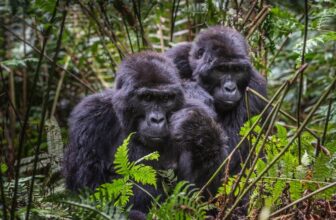
Mountain gorillas are highly social animals that live in groups known as troops or families. A typical family consists of a dominant silverback, several adult females, young gorillas, infants and sometimes additional males.
The silverback is a mature male whose back hair turns silver as he ages. He generally leads the group, protects its members, helps maintain group cohesion and makes important decisions about movement and daily activities.
Female gorillas play an essential role in raising infants, while young gorillas spend much of their time playing, climbing and learning social behaviours. Watching these interactions in the forest provides a fascinating insight into the lives of our closest relatives.
Gorilla family sizes vary, and their membership can change over time as individuals are born, mature, leave groups or join other families.
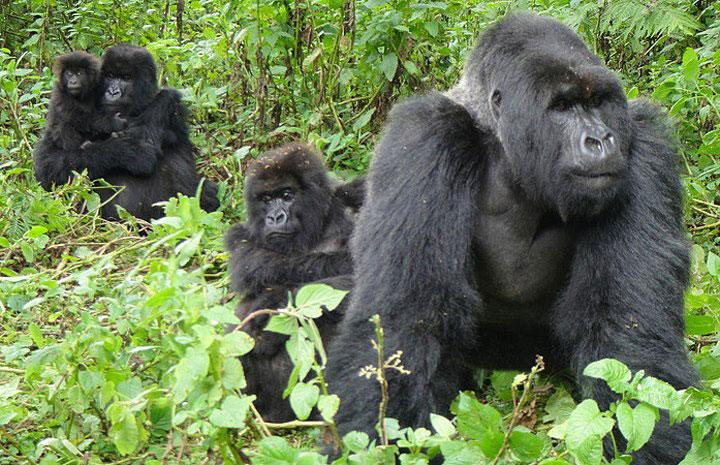
Gorilla Family in Bwindi Forest
1. Gorilla Family Groups in Bwindi Impenetrable National Park
Bwindi Impenetrable National Park is Uganda’s principal mountain gorilla trekking destination. Located in southwestern Uganda, the park protects an ancient tropical rainforest with steep hills, thick vegetation and remarkable biodiversity.
Bwindi is divided into four main gorilla trekking sectors:
- Buhoma
- Ruhija
- Rushaga
- Nkuringo
Each sector has habituated gorilla groups available for visitors to track, subject to the Uganda Wildlife Authority’s current arrangements and permit availability.
Buhoma Sector
Buhoma, in northern Bwindi, is one of Uganda’s best-known gorilla trekking areas. It is particularly popular with travellers staying in lodges around the park’s northern boundary.
Mubare Gorilla Family: Mubare is historically recognised as Uganda’s first habituated gorilla family, opening the way for organised gorilla tourism in Bwindi in 1993. It holds an important place in the history of mountain gorilla conservation and tourism.
Habinyanja Gorilla Family: Habinyanja is another well-known Buhoma group. Its history includes changes in leadership and group composition, reflecting the complex social relationships that shape mountain gorilla families.
Rushegura Gorilla Family: Rushegura emerged from the wider Habinyanja family history and is known as a separate habituated group in the Buhoma area.
Buhoma is an excellent base for visitors who want to combine gorilla trekking with forest walks, birdwatching, community experiences and stays at rainforest lodges.
Ruhija Sector
Ruhija lies in the eastern part of Bwindi and offers a different trekking experience through high-altitude forest landscapes.
Bitukura Gorilla Family: Bitukura is a recognised habituated family in Ruhija. Visitors tracking this group may observe different age categories interacting, from powerful adults to playful juveniles.
Oruzogo Gorilla Family: Oruzogo is known for its energetic young gorillas and engaging social behaviour. As with all gorilla families, its members and dynamics can change over time.
Kyaguriro Gorilla Group: Kyaguriro has been particularly important for scientific research and conservation. Its history is closely associated with efforts to understand mountain gorilla behaviour, ecology and social organisation. Its availability for ordinary tourist trekking should be confirmed with park authorities.
Ruhija is a rewarding choice for travellers interested in quieter forest surroundings, scenic views and the wider biodiversity of Bwindi.
Rushaga Sector
Rushaga, in southern Bwindi, is known for having several habituated gorilla groups and is an important base for gorilla trekking in Uganda.
Families historically associated with the Rushaga sector include:
- Nshongi Gorilla Family — historically known as a large gorilla group when it was first opened for tourism.
- Mishaya Gorilla Family — associated with a group that formed following changes in the Nshongi group’s social structure.
- Kahungye Gorilla Family — another recognised habituated family in the Rushaga area.
- Bweza Gorilla Family — a habituated group whose history is connected to the splitting of the Nshongi family.
- Busingye Gorilla Family — a group known for its own distinct social history.
- Bikingi Gorilla Group — associated with gorilla habituation and conservation activities.
- Mucunguzi Gorilla Family — another group historically associated with the Rushaga trekking area.
The precise list of groups open to tourists can change. Travellers should confirm the current allocation with the Uganda Wildlife Authority or their tour operator before booking.
Rushaga is especially useful for itinerary planning because it offers access to several trekking groups and a range of accommodation options around southern Bwindi.
Nkuringo Sector
Nkuringo lies in the southern part of Bwindi and is known for its dramatic hills, forest scenery and challenging trekking terrain.
Nkuringo Gorilla Family: The Nkuringo group is one of the historically established habituated families in this sector. Its history has included births, changes in membership and developments in group leadership.
Christmas Gorilla Family: Christmas is a silverback associated with a gorilla group in the Nkuringo area. The group is a reminder of how individual silverbacks and their families contribute to the diversity of Uganda’s gorilla trekking experiences.
Trekking in Nkuringo can involve steep climbs and uneven forest trails. Travellers should be prepared for physically demanding conditions, although the actual duration and difficulty depend on where the gorillas are located that day.
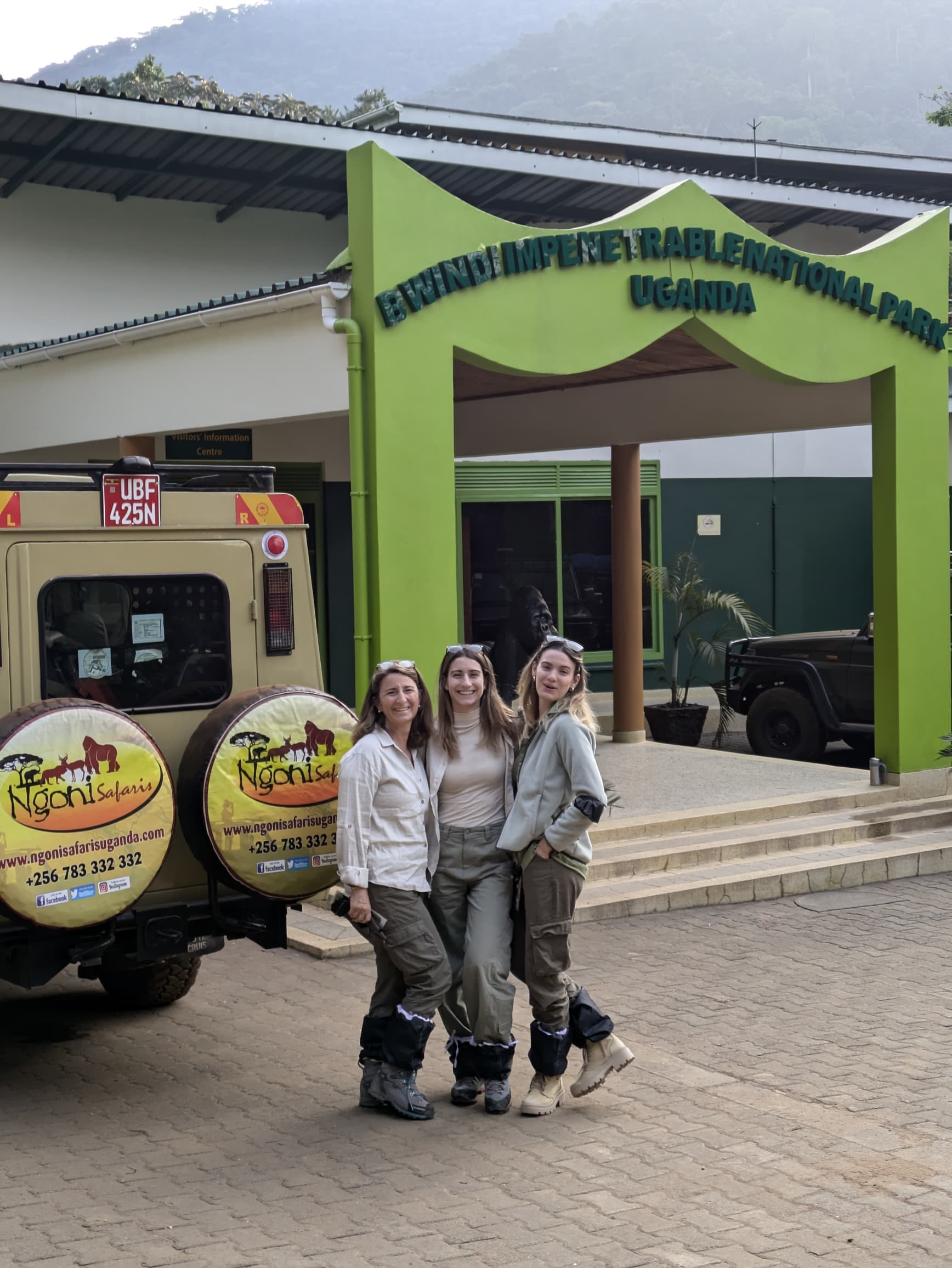
Tourists Ready for Gorilla Trekking in Bwindi.
2. Gorilla Family Groups in Mgahinga Gorilla National Park
Mgahinga Gorilla National Park is Uganda’s smallest national park, situated in the Virunga Mountains near the borders with Rwanda and the Democratic Republic of the Congo.
The park protects mountain gorillas alongside golden monkeys and other wildlife. Its dramatic volcanic scenery makes it an appealing destination for visitors seeking a combination of gorilla trekking and mountain landscapes.
Nyakagezi Gorilla Family
The Nyakagezi Gorilla Family is the best-known habituated gorilla family associated with Mgahinga Gorilla National Park.
The group has historically been notable for its multiple adult males, including silverbacks, and its movements within the Virunga conservation landscape. Its history demonstrates the importance of protecting connected forest habitats across national boundaries.
Visitors who trek to see Nyakagezi may observe the group’s social interactions, feeding behaviour, grooming and care of younger gorillas.
Because mountain gorillas move freely through forest habitats, their precise location and trekking conditions can vary. The park authorities determine the arrangements for tracking the group.
Mgahinga is particularly appealing to travellers who want to combine gorilla trekking with golden monkey tracking, volcanic scenery and cultural experiences in southwestern Uganda.
3. What Makes Every Gorilla Family Unique?
Although all mountain gorillas belong to the same subspecies, each family has its own social dynamics and history.
Some groups have several adult males, while others are led by a single dominant silverback. Some have numerous infants and juveniles, creating lively scenes of play, while others may include more mature individuals.
During a trek, visitors might see gorillas feeding on leaves, resting in clearings, grooming one another or moving through dense vegetation. Infants may cling to their mothers, while juveniles playfully interact with other members of the group.
The experience is never exactly the same twice. Wildlife encounters depend on the gorillas’ movements, the forest environment and the behaviour of individual animals.
4. How Are Gorilla Families Habituated?
Gorilla habituation is the gradual process through which wild gorillas become accustomed to the presence of authorised human observers.
Trained researchers, conservation staff and trackers spend time observing a group and helping it become comfortable with people following strict procedures. This process can take several years and requires considerable patience and expertise.
Habituation does not make gorillas domesticated animals. They remain wild, powerful and unpredictable, and visitors must always follow the instructions of their guides and park rangers.
Uganda offers standard gorilla trekking experiences and, where officially available, a separate gorilla habituation experience. The latter allows a longer period with a gorilla group under specialised arrangements and requires the appropriate permit.
5. How to Choose the Right Gorilla Trekking Sector
Choosing the right sector depends on your accommodation, travel route, fitness level and the permits available for your dates.
Buhoma: Suitable for itineraries exploring northern Bwindi and the surrounding communities.
Ruhija: An option for travellers approaching Bwindi from the eastern side and interested in forest scenery and birdlife.
Rushaga: Offers access to several habituated groups and can work well for itineraries based in southern Bwindi.
Nkuringo: Appeals to travellers seeking dramatic landscapes and who are prepared for potentially steep terrain.
Mgahinga: Ideal for visitors interested in the Virunga Mountains, golden monkey tracking and a gorilla trek in a volcanic landscape.
Gorilla family allocation is generally managed by the relevant park authorities. Travellers should not assume they can choose a particular family in advance, and a group’s name or location should not be treated as a guarantee of a specific encounter.
6. Gorilla Trekking Permits and Visitor Guidelines
A valid gorilla trekking permit is required to participate in a standard gorilla trek in Uganda. Permits are limited to help protect the gorillas and manage visitor numbers.
Before your trek, remember to:
- Follow all instructions given by your ranger and guide.
- Maintain the required distance from the gorillas.
- Avoid visiting gorillas when ill, particularly with symptoms of a respiratory infection.
- Keep your voice low and avoid sudden movements.
- Never feed, touch or attempt to attract the gorillas.
- Follow all photography rules and avoid using flash.
- Carry drinking water, suitable hiking boots, rain protection and clothing appropriate for a forest trek.
The minimum age and current permit fees should be confirmed with the Uganda Wildlife Authority when planning your trip, as official requirements and prices can change.
Responsible gorilla tourism supports conservation work, monitoring and local livelihoods when managed appropriately.
7. The Role of Gorilla Tourism in Conservation
Mountain gorillas face continuing pressures from habitat loss, disease and other human-related threats. Protecting their habitat and supporting the communities living around protected areas are essential to their long-term survival.
Responsible tourism can contribute to conservation by creating employment for guides, trackers, rangers, porters and hospitality workers. It can also support accommodation providers, community enterprises and local cultural initiatives.
Every visitor has a responsibility to minimise disturbance and respect the rules designed to protect these endangered primates.
By choosing a responsible local tour operator, following park regulations and treating wildlife with respect, travellers can help support the future of mountain gorilla conservation in Uganda.
Plan Your Uganda Gorilla Safari with Ngoni Safaris
At Ngoni Safaris Uganda, we help travellers organise memorable gorilla trekking adventures in Bwindi Impenetrable National Park and Mgahinga Gorilla National Park.
Our team can assist with gorilla permit arrangements, private 4×4 transport, accommodation, professional driver-guides and personalised itineraries that combine gorilla trekking with Uganda’s national parks, wildlife safaris and cultural experiences.
Whether you want a short gorilla trekking trip or a longer journey combining gorillas, chimpanzees, wildlife and scenic landscapes, we can help you plan an experience suited to your interests and travel dates.
Contact Ngoni Safaris Uganda to start planning your mountain gorilla adventure.