Elephants in Queen Elizabeth National Park, Uganda: Where to See African Elephants on Safari
Queen Elizabeth National Park is one of Uganda’s most rewarding destinations for wildlife lovers, offering excellent opportunities to encounter African elephants in their natural habitat. With its sweeping savannah plains, woodland landscapes, crater lakes and the famous Kazinga Channel, the park provides a beautiful setting for unforgettable elephant-watching experiences.
For travellers planning a Uganda wildlife safari, seeing elephants roaming freely across the African wilderness is often one of the highlights. With Ngoni Safaris Uganda, visitors can explore Queen Elizabeth National Park on a guided safari designed to bring them closer to Uganda’s remarkable wildlife and landscapes.
Discover African Elephants in Queen Elizabeth National Park
African elephants are among the largest land mammals on Earth and an iconic species of Uganda’s wildlife. Their impressive size, long trunks, large ears and distinctive tusks make them fascinating to observe in the wild.
Queen Elizabeth National Park supports populations of African savannah elephants, which can often be seen moving through grasslands, browsing on trees and shrubs, or gathering near water sources. Elephants play an essential role in the ecosystem by dispersing seeds, creating pathways through vegetation and helping shape the landscapes they inhabit.
Watching a family group moving together across the savannah can be particularly memorable. Young calves often stay close to their mothers and other members of the herd, while older elephants help protect and guide the group.
Where to See Elephants in Queen Elizabeth National Park
1. Kasenyi Plains
The Kasenyi Plains are well known for game drives and sightings of several wildlife species. The open grasslands and surrounding woodland provide opportunities to spot elephants alongside buffaloes, Uganda kob, warthogs and other animals.
Early-morning and late-afternoon game drives are excellent ways to explore this area, when wildlife may be more active and the light creates beautiful conditions for photography.
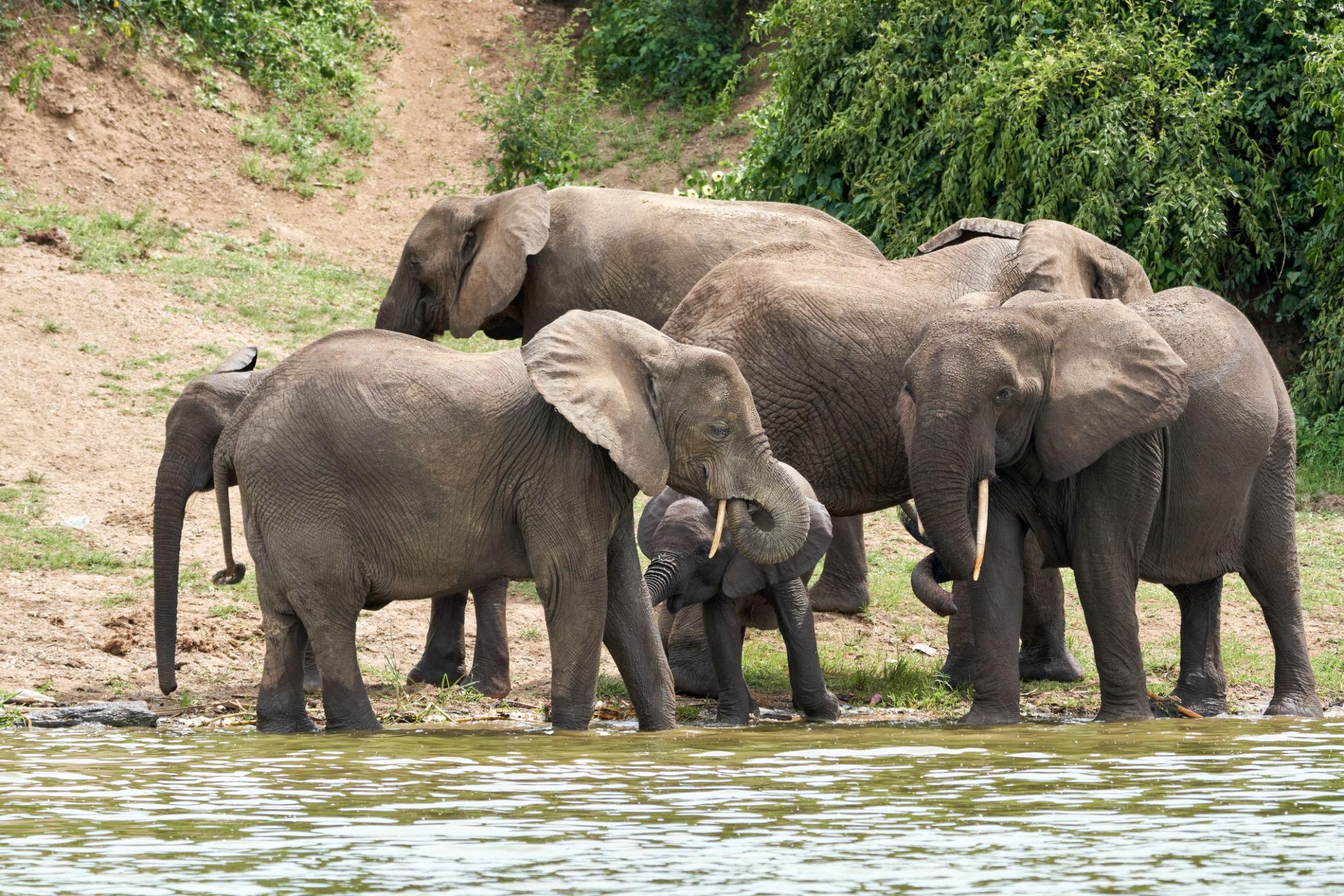
Elephants at Queen Elizabeth National Park
2. Mweya Peninsula
Mweya Peninsula is an important wildlife-viewing area overlooking the Kazinga Channel. Its surrounding savannah and woodland habitats can offer opportunities to encounter elephants, buffaloes and other wildlife.
The peninsula is also a convenient base for combining land-based game drives with a boat cruise along the Kazinga Channel.
3. Ishasha Sector
The Ishasha Sector, in the southern part of Queen Elizabeth National Park, is famous for its tree-climbing lions. It also offers beautiful natural scenery and opportunities to search for elephants and other large mammals.
A safari through Ishasha adds variety to a Uganda wildlife itinerary, particularly for visitors travelling between Queen Elizabeth National Park and Bwindi Impenetrable National Park for mountain gorilla trekking.
4. The Kazinga Channel
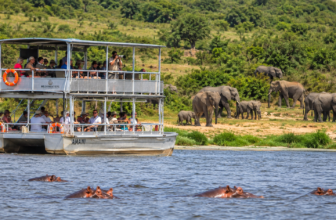
The Kazinga Channel connects Lake Edward and Lake George and is one of the park’s most celebrated wildlife attractions. While the channel is especially famous for its large concentrations of hippos and numerous waterbirds, elephants can sometimes be seen approaching the shoreline to drink or move along the water’s edge.
A boat cruise provides a different perspective on the park’s wildlife and landscapes. Sightings vary, so elephants are never guaranteed during a particular cruise.
The Best Way to See Elephants: Game Drives and Boat Safaris
One of the best ways to look for elephants in Queen Elizabeth National Park is on a guided game drive in a suitable 4×4 safari vehicle.
During a game drive, visitors can explore different habitats while an experienced driver-guide helps locate wildlife and explains animal behaviour. A private safari allows travellers to enjoy a flexible pace, take photographs and spend more time observing wildlife when conditions permit.
A boat cruise on the Kazinga Channel complements the game drive by revealing wildlife along the water. Visitors may see hippos, Nile crocodiles, buffaloes, elephants near the shore and a remarkable variety of birdlife.
Combining these two activities offers a varied wildlife experience without relying on a single viewing location.
Elephant Behaviour and Family Life
Elephants are highly social animals that live in family groups typically led by an experienced female known as a matriarch. The matriarch helps guide the herd towards food and water and responds to potential dangers.
Elephants communicate through sounds, body movements, touch and low-frequency vocalisations. Their trunks are versatile tools used for feeding, drinking, smelling, touching and interacting with other elephants.
Visitors may observe elephants feeding, walking in groups, bathing in water or using their trunks to pull vegetation from trees. However, these animals are powerful and should always be observed from a safe distance under the guidance of trained safari professionals.
Best Time to See Elephants in Queen Elizabeth National Park
Queen Elizabeth National Park can be visited throughout the year, and elephants may be encountered in different seasons.
The drier periods, generally around June to August and December to February, are often popular for wildlife viewing because some areas are easier to explore and animals may gather around accessible water sources. Weather patterns vary, however, and wildlife sightings depend on local conditions.
The wetter months can bring lush vegetation, green landscapes and excellent photographic opportunities. Roads may become more challenging in some areas, but the park remains an attractive destination for nature enthusiasts.
For the best experience, consider an early-morning game drive followed by an afternoon boat cruise, subject to the day’s operating schedule.
Elephant Photography in Queen Elizabeth National Park
Photographing elephants in their natural habitat can be one of the most rewarding parts of a Uganda safari. Their size, expressive faces, textured skin and family interactions offer many opportunities for memorable images.
For better results:
- Carry a camera with a suitable zoom lens.
- Use early-morning or late-afternoon light where possible.
- Be patient and allow the elephants to behave naturally.
- Follow your guide’s instructions and keep a safe distance.
- Avoid shouting, sudden movements or attempts to attract the animals’ attention.
Responsible wildlife photography puts animal welfare first. Never approach elephants on foot or instruct a driver to block their path.
Elephant Conservation in Uganda
Elephants face ongoing conservation challenges across parts of Africa, including habitat loss, human-wildlife conflict and illegal killing for ivory. Protected areas such as Queen Elizabeth National Park play an important role in providing habitat and supporting conservation efforts.
Responsible tourism can help support the wider value of wildlife protection by creating employment and income through guiding, accommodation, transport and other local services.
Visitors can contribute by following park regulations, respecting wildlife distances, avoiding litter and choosing safari operators that promote responsible tourism.
Combine Elephant Watching with Other Uganda Safari Experiences
Queen Elizabeth National Park is an excellent stop on a longer Uganda safari. Travellers can combine elephant watching with several other memorable experiences:
- Kazinga Channel boat cruise: Discover hippos, crocodiles and waterbirds along the shoreline.
- Kasenyi Plains game drives: Search for elephants, buffaloes, Uganda kob and other savannah wildlife.
- Ishasha wildlife safari: Explore the southern sector, known for its tree-climbing lions.
- Chimpanzee trekking in Kyambura Gorge: Explore a forested gorge in search of wild chimpanzees, subject to permit availability and trekking conditions.
- Mountain gorilla trekking in Bwindi: Continue south to experience one of Uganda’s most remarkable wildlife encounters.
- Cultural experiences: Learn about local communities, traditions and ways of life around the park.
A carefully planned itinerary can combine these activities while balancing wildlife viewing, relaxation and travel time.
Explore Queen Elizabeth National Park with Ngoni Safaris Uganda
At Ngoni Safaris Uganda, we help travellers experience Uganda’s extraordinary wildlife through personalisedF safari itineraries, professional driver-guides and comfortable 4×4 safari vehicles.
Whether you are planning a short wildlife getaway or a longer journey combining elephants, chimpanzees and mountain gorillas, our team can help organise accommodation, park activities, transport and other safari arrangements to suit your travel plans.
Queen Elizabeth National Park offers an unforgettable opportunity to appreciate African elephants in a spectacular natural setting. From the open Kasenyi Plains to the shores of the Kazinga Channel, every safari brings the possibility of a new wildlife discovery.
Plan your Uganda elephant safari with Ngoni Safaris Uganda.