Ebola Confirmed in Nigeria: What We Know About the Latest Outbreak
Published: 21 October 2026
Nigeria has confirmed its first case of Ebola virus disease in more than a decade, raising public health concerns across Africa as authorities intensify efforts to prevent further transmission. The case was confirmed in the Federal Capital Territory (FCT), where the patient is receiving medical care in isolation.
According to the World Health Organization (WHO), laboratory tests confirmed Ebola Bundibugyo virus disease on 20 October 2026. The case is linked to a woman with a recent travel history involving Uganda. Investigations are ongoing to establish the source of infection and determine the patient’s full travel and exposure history.
What Happened in Nigeria?
Nigeria’s Federal Ministry of Health and Social Welfare announced the confirmed case after laboratory testing at a private health facility in Abuja. The patient reportedly developed symptoms on 7 October and sought medical attention on 11 October.
Following confirmation, Nigerian health authorities activated emergency response measures to identify and monitor people who may have been exposed to the virus.
As of the latest official announcement, 44 contacts had been identified for monitoring. These include people who may have had contact with the patient and healthcare workers involved in her care. Contact tracing and infection prevention measures are being strengthened to reduce the risk of further transmission.
The Nigeria Centre for Disease Control and Prevention (NCDC) is coordinating the national response with support from the WHO and other public health partners.
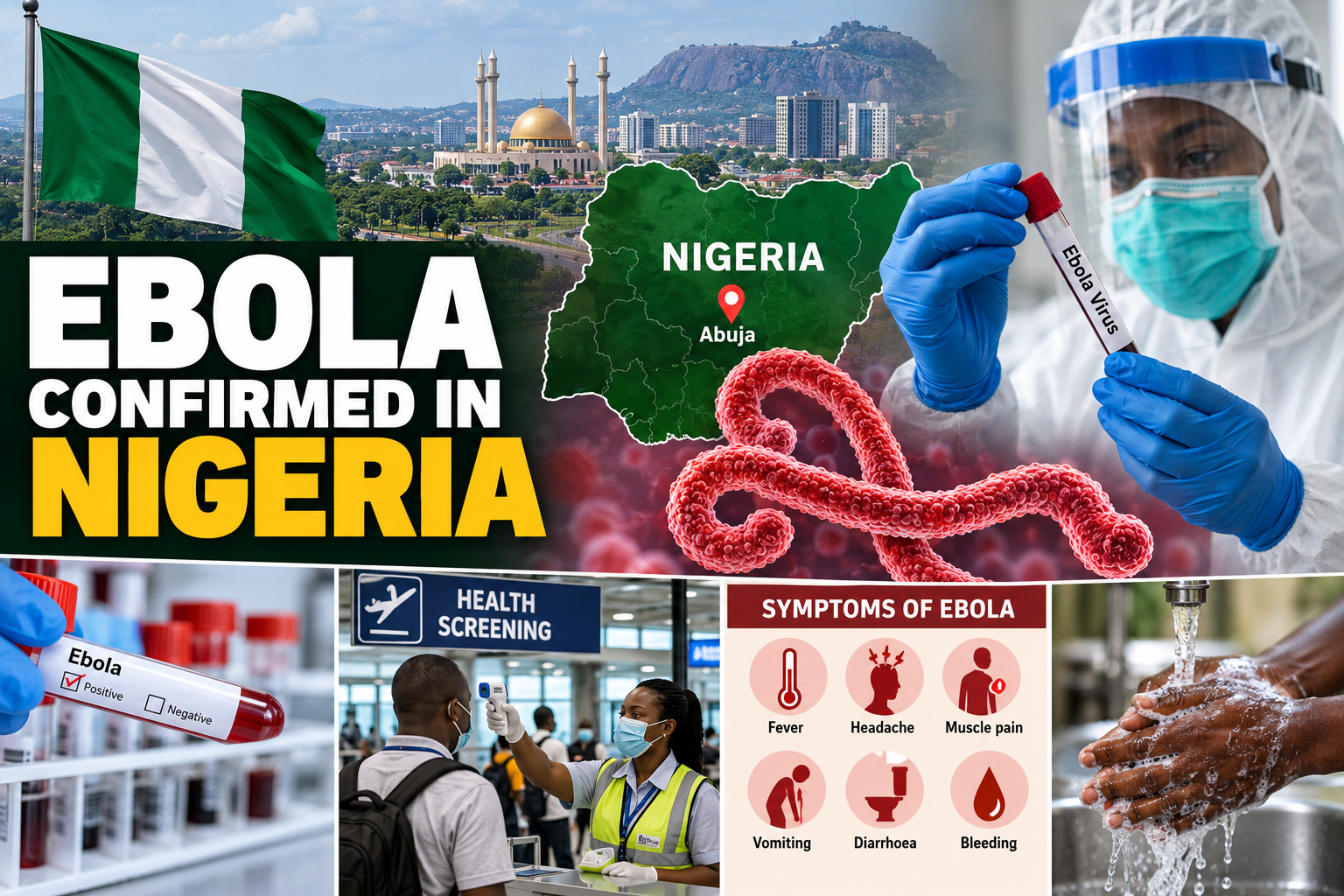
Ebola Confirmed in Nigeria
Which Type of Ebola Has Been Confirmed?
The confirmed infection is caused by the Bundibugyo virus, a species of Ebola virus responsible for the wider outbreak reported in the Democratic Republic of the Congo in 2026.
Bundibugyo virus disease is a serious illness that can cause severe complications and death. Unlike some other Ebola virus species, there is currently no approved vaccine or specific treatment established for Bundibugyo virus disease. Early medical assessment, supportive care and strict infection prevention measures are important in managing the disease.
The current outbreak has placed health authorities across several African countries on heightened alert.
Is Ebola Spreading Across Africa?
The confirmation in Nigeria comes amid a wider regional outbreak. The Democratic Republic of the Congo has reported thousands of confirmed cases, while Kenya has also reported cases linked to the regional spread of the virus.
Nigeria’s case highlights the importance of cross-border cooperation, effective disease surveillance and rapid identification of people who may have been exposed.
However, one confirmed case in Nigeria does not automatically mean there is widespread transmission throughout the country. The public health situation depends on ongoing investigations, contact tracing and whether additional infections are identified.
Travellers and residents should follow official health guidance rather than rely on rumours or unverified social media reports.
What Are the Symptoms of Ebola?
Symptoms of Ebola virus disease can begin suddenly and may include:
- Fever
- Severe weakness and fatigue
- Headache
- Muscle pain
- Sore throat
- Vomiting and diarrhoea
- Abdominal pain
- Unexplained bleeding in some cases
These symptoms can resemble those of other illnesses, including malaria and other infections common in tropical regions. Symptoms alone cannot confirm Ebola; medical assessment and laboratory testing are required.
People who develop compatible symptoms after a possible exposure should seek urgent advice from public health authorities and explain their exposure and travel history. They should call ahead before visiting a healthcare facility and avoid close contact with others while awaiting instructions.
How Does Ebola Spread?
Ebola spreads primarily through direct contact with the blood or other body fluids of a person who is sick with the disease or has died from it. Transmission can also occur through contaminated materials, such as clothing, bedding or medical equipment.
Ebola is not generally spread through casual contact with an uninfected person. People who have not developed symptoms do not transmit Ebola through the usual routes of transmission.
Important prevention measures include:
- Washing hands regularly with soap and water or using an appropriate hand sanitiser.
- Avoiding contact with the blood and body fluids of anyone suspected of having Ebola.
- Not handling the bodies of people who have died from suspected or confirmed Ebola without trained public health support.
- Following instructions from healthcare workers and public health authorities.
- Reporting possible exposure promptly and cooperating with contact-tracing teams.
What Does This Mean for Travellers to Africa?
The confirmation of Ebola in Nigeria is an important development for regional travel and public health preparedness. Nevertheless, travellers should distinguish between a confirmed case and a widespread outbreak affecting an entire country.
Anyone planning international travel should consult current advisories from the WHO and relevant national health authorities, particularly when travelling to areas experiencing active transmission.
Airlines, airports, healthcare facilities and border authorities may strengthen surveillance and preparedness measures when necessary. Travellers should follow any applicable official instructions and provide accurate information if contacted by public health teams.
For tourists planning safaris in Uganda, Rwanda, Kenya or other East African destinations, travel decisions should be based on the latest verified information about the specific destination and relevant travel routes. An Ebola case reported in Nigeria does not, by itself, establish that all destinations in East Africa are unsafe.
The Importance of Regional Cooperation
The latest case reinforces the importance of cooperation between African governments, laboratories, hospitals and international health organisations. Rapid diagnosis, isolation of confirmed patients, monitoring of contacts and infection prevention in healthcare settings are essential to limiting further spread.
Nigeria has previous experience responding to Ebola, having successfully contained an outbreak in 2014. Health officials are now working to apply public health lessons and strengthen preparedness in response to the Bundibugyo virus.
The coming days will be important as investigators continue tracing contacts and assessing whether additional cases have occurred.
Conclusion
Nigeria confirmed an imported case of Ebola Bundibugyo virus disease on 20 October 2026. The patient was isolated and receiving medical care, while authorities identified 44 contacts for monitoring and intensified public health measures.
Although the development requires serious attention, accurate information and timely action are more useful than panic. Residents, businesses and travellers should follow official updates, practise appropriate hygiene and cooperate with health authorities.
For the latest verified information, consult the World Health Organization Regional Office for Africa and the Nigeria Centre for Disease Control and Prevention.
This article is based on information available on 21 October 2026. The situation may change as investigations continue.