Uganda is one of Africa’s most rewarding safari destinations. Known as the “Pearl of Africa,” the country combines classic savannah wildlife, tropical rainforests, volcanic landscapes, lakes, rivers and snow-capped mountains within a relatively compact area. Visitors can track mountain gorillas in the morning, cruise past hippos on the Nile, search for tree-climbing lions and walk through a forest filled with chimpanzees—all on the same holiday.
Uganda has ten national parks, each offering a different experience. Whether you are planning your first African safari, a primate adventure, a photography tour or an active holiday, the following are the best national parks to visit in Uganda.
1. Bwindi Impenetrable National Park
Best for: Mountain gorilla trekking and forest experiences
Bwindi Impenetrable National Park is Uganda’s most famous wildlife destination and a UNESCO World Heritage Site. Its ancient rainforest protects almost half of the world’s remaining mountain gorillas, making it one of the best places on Earth for a close encounter with these remarkable primates.
Gorilla trekking begins early in the morning with a briefing from Uganda Wildlife Authority rangers. Visitors then enter the forest in small groups to locate an assigned gorilla family. Once the gorillas are found, trekkers spend one unforgettable hour observing their behaviour, family relationships and daily routines. A gorilla habituation experience, which allows up to four hours with a semi-habituated family, is also available in selected areas.
Bwindi is divided into four trekking sectors: Buhoma, Ruhija, Rushaga and Nkuringo. Each sector has its own gorilla families, lodges and walking trails. Beyond gorilla trekking, visitors can enjoy birdwatching, forest walks and cultural encounters with communities living near the park.
Recommended stay: Two to three nights
Best time to visit: June to September and December to February, although trekking is available throughout the year
2. Queen Elizabeth National Park
Best for: Diverse wildlife, boat safaris and tree-climbing lions
Queen Elizabeth National Park is one of Uganda’s most varied and popular safari destinations. The park stretches from the foothills of the Rwenzori Mountains to the shores of Lake Edward and includes open savannah, wetlands, crater lakes, forests and the famous Kazinga Channel.
Morning and evening game drives on the Kasenyi Plains may reveal elephants, buffaloes, Uganda kobs, warthogs, hyenas and lions. Leopards are present but require patience and a little luck. In the southern Ishasha sector, lions are famous for resting in large fig trees, creating one of Uganda’s most distinctive wildlife sightings.
A boat cruise on the Kazinga Channel is a highlight of any visit. The channel attracts large numbers of hippos, crocodiles, elephants, buffaloes and waterbirds, often seen at remarkably close range from the boat. Visitors can also explore the crater lake region, visit local communities or add chimpanzee tracking in the forested Kyambura Gorge.
Recommended stay: Two to three nights
Best time to visit: June to September and January to February; the park remains accessible throughout the year
3. Murchison Falls National Park
Best for: Nile cruises, dramatic scenery and classic big-game safaris
Murchison Falls is Uganda’s largest national park and an essential stop for travellers who want a traditional savannah safari. The River Nile passes through the park before being forced through a narrow gorge and plunging powerfully into the river below, creating the spectacular Murchison Falls.
Game drives on the northern bank offer opportunities to see elephants, giraffes, buffaloes, hartebeests, Uganda kobs, oribis, lions and, occasionally, leopards. The park is especially memorable for its combination of wildlife and river scenery.
The boat cruise to the bottom of Murchison Falls travels along a wildlife-rich stretch of the Nile. Hippos and crocodiles are common, while elephants, buffaloes and antelopes frequently gather at the water’s edge. Visitors can also take a boat trip toward the Nile Delta, one of the country’s best areas for searching for the rare shoebill stork.
A visit to the Top of the Falls provides a close view of the Nile squeezing through the rocky gorge. Many itineraries combine Murchison Falls with a guided rhino walk at Ziwa Rhino Sanctuary while travelling from Kampala or Entebbe.
Recommended stay: Two to three nights
Best time to visit: December to February and June to September
4. Kibale National Park
Best for: Chimpanzee tracking and primate viewing
Kibale National Park is widely regarded as the primate capital of East Africa. The tropical forest supports 13 primate species, including a large population of chimpanzees. It is Uganda’s leading destination for chimpanzee tracking and one of the best places in Africa to observe wild chimpanzees.
During a standard chimpanzee trek, experienced guides and trackers lead visitors through the forest while listening for calls and watching for movement in the canopy. Once a chimpanzee community is located, visitors normally spend one hour observing it. The longer chimpanzee habituation experience provides additional time in the forest and a deeper look at chimpanzee behaviour.
Other primates may include black-and-white colobus monkeys, red colobus monkeys, red-tailed monkeys, blue monkeys and grey-cheeked mangabeys. The nearby Bigodi Wetland Sanctuary is an excellent community-run destination for guided nature walks, birdwatching and village experiences.
Recommended stay: Two nights
Best time to visit: June to September and December to February; chimpanzee activities operate year-round
5. Kidepo Valley National Park
Best for: Remote wilderness and uncrowded game viewing
Located in Uganda’s far northeast, Kidepo Valley National Park offers one of the wildest and most dramatic safari landscapes in East Africa. Its sweeping grasslands, rugged mountains and seasonal rivers create a feeling of genuine isolation.
The Narus Valley is the park’s main wildlife-viewing area, particularly during the dry season when animals gather near permanent water. Visitors may see large herds of buffaloes, elephants, giraffes, zebras, hartebeests, lions and leopards. Kidepo also protects species that are rare or absent in many other Ugandan parks, including cheetahs, bat-eared foxes and ostriches.
The park receives fewer visitors than Uganda’s more accessible reserves, making it ideal for travellers seeking privacy, photography and a sense of untouched wilderness. Cultural visits with neighbouring Karamojong communities can add meaningful insight into the region’s pastoral traditions.
Recommended stay: Two to three nights
Best time to visit: September to March, although Kidepo can be visited throughout the year
6. Lake Mburo National Park
Best for: Walking safaris, cycling and short trips from Entebbe or Kampala
Lake Mburo National Park is conveniently located between Entebbe and the gorilla parks of southwestern Uganda. Although it is one of the country’s smaller parks, it offers activities that are difficult to find elsewhere in Uganda.
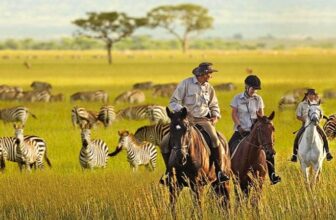
The park is home to zebras, impalas, elands, buffaloes, topis, warthogs, hippos and several smaller antelope species. Because Lake Mburo has no elephants and relatively few large predators, visitors can join guided walking safaris and experience the landscape at ground level. Cycling safaris, horseback riding, game drives and boat cruises are also available.
Lake Mburo works particularly well as the first or final safari stop on a longer Uganda itinerary. It is also a good choice for travellers with limited time who want a wildlife experience without travelling far into the country.
Recommended stay: One to two nights
Best time to visit: June to August and December to February; the park is open year-round
7. Mgahinga Gorilla National Park
Best for: Gorilla trekking, golden monkeys and volcano hiking
Mgahinga Gorilla National Park may be Uganda’s smallest national park, but its scenery and activities are exceptional. It forms part of the Virunga Conservation Area and protects the forested slopes of three extinct volcanoes: Mount Muhabura, Mount Gahinga and Mount Sabyinyo.
Visitors can track mountain gorillas or join a lively golden monkey trek through the bamboo forest. Adventurous travellers may hike one of the volcanoes, with the Mount Sabyinyo trail offering the unusual opportunity to stand near the meeting point of Uganda, Rwanda and the Democratic Republic of Congo.
The Batwa cultural trail introduces visitors to the forest knowledge and traditions of the Batwa people. Mgahinga is a particularly attractive option for travellers combining Uganda with Rwanda because it lies close to Kisoro and the Cyanika border.
Recommended stay: Two to three nights
Best time to visit: June to September and December to February
8. Rwenzori Mountains National Park
Best for: Trekking, alpine scenery and adventure travel
The Rwenzori Mountains, often called the “Mountains of the Moon,” offer one of Africa’s most challenging and beautiful trekking experiences. This UNESCO World Heritage Site contains glaciers, waterfalls, valleys, giant lobelias and other unusual high-altitude vegetation.
Experienced mountaineers can attempt Margherita Peak on Mount Stanley, Uganda’s highest point at 5,109 metres. Travellers who do not want a summit expedition can choose shorter forest walks, day hikes or multi-day routes through the lower valleys and moorlands.
The Rwenzoris are best suited to active travellers who value dramatic scenery and physical adventure. Proper preparation, suitable equipment and an experienced mountain team are essential for longer treks.
Recommended stay: One day to ten or more days, depending on the route
Best time to visit: December to February and June to August
9. Semuliki National Park
Best for: Birdwatching, hot springs and Central African forest species
Semuliki National Park lies in the Albertine Rift near Uganda’s border with the Democratic Republic of Congo. Its lowland forest is an eastern extension of the great Ituri Forest and supports wildlife and bird species more commonly associated with Central Africa.
The park is especially rewarding for serious birdwatchers, with many species found nowhere else in East Africa. The Sempaya Hot Springs are its best-known attraction. A guided walk through the forest leads to the male and female springs, where steam rises from the bubbling water.
Semuliki can be combined with Kibale National Park, Fort Portal and the crater lake region for an itinerary focused on forests, birds and less-visited destinations.
Recommended stay: One to two nights
Best time to visit: December to February and June to August
10. Mount Elgon National Park
Best for: Hiking, waterfalls and quieter mountain adventures
Mount Elgon National Park protects the Ugandan side of an ancient extinct volcano on the border with Kenya. Its highest point, Wagagai Peak, rises to 4,321 metres, while the mountain’s vast caldera is one of the largest in the world.
The park offers multi-day treks, shorter nature walks, caves, waterfalls and scenic viewpoints. Nearby Sipi Falls is one of eastern Uganda’s most beautiful attractions and a popular base for hiking, coffee tours, abseiling and cultural experiences.
Mount Elgon generally receives fewer trekkers than the Rwenzori Mountains and is a good option for travellers looking for a quieter and moderately challenging mountain experience.
Recommended stay: Two to five nights
Best time to visit: June to August and December to March
Which Uganda National Parks Should You Choose?
The best combination depends on your interests and the number of days available:
- For gorillas and chimpanzees: Bwindi, Mgahinga and Kibale
- For classic wildlife safaris: Murchison Falls, Queen Elizabeth and Kidepo Valley
- For a short Uganda safari: Lake Mburo or Murchison Falls
- For birdwatching: Semuliki, Queen Elizabeth, Kibale and Murchison Falls
- For hiking and adventure: Rwenzori Mountains, Mount Elgon and Mgahinga
- For a first-time Uganda journey: Murchison Falls, Kibale, Queen Elizabeth and Bwindi
A well-paced 10- to 14-day itinerary can include Uganda’s most celebrated circuit: Murchison Falls, Kibale, Queen Elizabeth and Bwindi. Travellers with additional time can add Lake Mburo, Mgahinga, Kidepo Valley or the Rwenzori Mountains.
When Is the Best Time to Visit Uganda’s National Parks?
Uganda is a year-round destination. The drier periods from June to September and December to February generally provide easier trekking conditions and excellent game viewing. The wetter months bring greener landscapes, fewer visitors and outstanding birdlife, although forest trails can become muddy.
Gorilla and chimpanzee permits are limited and should be reserved well in advance, particularly for travel during the high season. Travellers should also allow enough time between parks, as Uganda’s scenic road journeys can be long.
Plan Your Uganda Safari with Ngoni Safaris Uganda
Ngoni Safaris Uganda creates private, tailor-made journeys for solo travellers, couples, families and groups. We can arrange gorilla and chimpanzee permits, carefully selected accommodation, a professional English-speaking driver-guide, airport transfers and transportation in a private 4×4 Toyota Land Cruiser with a pop-up roof.
Whether you want a short gorilla trekking tour, a classic wildlife circuit or a complete Uganda and Rwanda adventure, our team will design an itinerary around your travel dates, interests, preferred comfort level and budget.
Contact Ngoni Safaris Uganda today and let us help you discover the best national parks in the Pearl of Africa.