Wild Cats in Uganda: Where to See Lions, Leopards, Cheetahs and Smaller Felines
Uganda is famous for mountain gorillas, chimpanzees, elephants and the source of the River Nile, but the country is also home to an exciting variety of wild cats. From powerful lions resting in the branches of fig trees to elusive leopards moving silently through the savannah, Uganda offers rewarding experiences for travellers interested in Africa’s feline predators.
The country’s diverse landscapes—including open grasslands, tropical forests, rocky valleys and semi-arid plains—provide suitable habitats for both large and small wild cats. Some species are regularly seen during game drives, while others are secretive and require patience, good timing and a little luck.
Join Ngoni Safaris on a journey through Uganda’s national parks to discover the remarkable wild cats that live in the Pearl of Africa.
Lions in Uganda
The African lion is Uganda’s largest wild cat and one of the most sought-after animals on safari. Lions live in prides made up of related females, their cubs and one or more adult males. They spend much of the day resting and become more active during the cooler hours of early morning, evening and night.
Uganda’s main lion populations are found in:
- Queen Elizabeth National Park
- Murchison Falls National Park
- Kidepo Valley National Park
Tree-Climbing Lions of Ishasha
The Ishasha Sector, located in the southern part of Queen Elizabeth National Park, is famous for its tree-climbing lions. Visitors may see entire prides resting on the broad branches of fig trees while keeping watch over the surrounding plains.
Several theories explain this unusual behaviour. The lions may climb trees to escape insects and the heat on the ground, enjoy the cool breeze or gain a better view of potential prey. Whatever the reason, seeing a lion stretched across a tree branch is one of Uganda’s most memorable wildlife experiences.
Wildlife sightings can never be guaranteed, but spending enough time in Ishasha with an experienced safari guide greatly improves your chances.
Lion Tracking in Queen Elizabeth National Park
Visitors interested in learning more about lion behaviour and conservation may be able to participate in an organised lion-tracking experience in Queen Elizabeth National Park.
Accompanied by researchers and trained guides, guests help locate monitored lions while learning about pride structures, territories, feeding behaviour and the challenges facing these animals. Availability is limited, so the activity should be arranged in advance.
Leopards in Uganda
The leopard is one of Africa’s most beautiful and secretive predators. Its spotted coat provides excellent camouflage, allowing it to disappear into grasslands, woodland and rocky terrain.
Leopards are usually solitary and may be active during the early morning, evening or night. They are powerful climbers and sometimes carry their prey into trees to keep it away from lions, hyenas and other scavengers.
Some of Uganda’s best places for possible leopard sightings include:
- Queen Elizabeth National Park
- Murchison Falls National Park
- Kidepo Valley National Park
- Lake Mburo National Park
Lake Mburo is particularly interesting because leopards are present in the park’s woodland and rocky areas. However, they remain difficult to see because of their secretive nature.
The best strategy is to begin game drives early, stay observant and listen to the alarm calls of animals such as monkeys, antelopes and birds. These sounds can sometimes reveal the presence of a nearby predator.
Cheetahs in Uganda
Cheetahs are Uganda’s fastest wild cats and the fastest land animals in the world. Their slim bodies, long legs and flexible spines are designed for short bursts of extraordinary speed.
Unlike leopards, cheetahs generally prefer open landscapes where they can use their speed to hunt. They mainly feed on smaller antelopes and other animals that can be chased across open ground.
Where Can You See Cheetahs in Uganda?
Kidepo Valley National Park is Uganda’s best destination for possible cheetah sightings. Located in the remote northeastern corner of the country, Kidepo contains broad savannah plains surrounded by mountains and rocky outcrops.
Cheetahs are uncommon and sightings are never assured, but Kidepo offers the most suitable habitat and the strongest chance of encountering them in Uganda. The park’s dramatic scenery, limited visitor numbers and diverse wildlife make it one of East Africa’s most rewarding wilderness destinations.
Cheetahs have also been recorded in parts of the Karamoja region, including areas associated with Pian Upe Wildlife Reserve, although sightings are rare.
Servals in Uganda
The serval is a graceful, medium-sized wild cat with long legs, large ears and a golden coat marked with black spots and stripes. Its unusually long legs allow it to see above tall grass and make impressive leaps when hunting.
Servals mainly feed on rodents, birds, frogs, reptiles and insects. Their large ears help them detect small animals moving beneath vegetation.
They occur in suitable grassland and wetland habitats in Uganda, including areas around:
- Queen Elizabeth National Park
- Murchison Falls National Park
- Kidepo Valley National Park
- Lake Mburo National Park
Servals are mostly active during the early morning, late evening and night, making them less frequently seen than lions.
Caracals in Uganda
The caracal is a powerful and elegant wild cat recognised by its reddish-brown coat and distinctive black ear tufts. Its name is believed to come from a word meaning “black ear.”
Caracals are excellent jumpers and can leap into the air to catch birds. They also hunt rodents, hares, reptiles and small antelopes.
In Uganda, caracals are associated mainly with dry, open habitats in the northeastern parts of the country. Kidepo Valley National Park and the wider Karamoja region provide some of the most suitable environments for them.
However, caracals are extremely elusive. Seeing one is a rare and special safari experience.
African Golden Cats in Uganda
The African golden cat is one of Uganda’s most mysterious forest animals. Despite its name, its coat can vary from golden brown to reddish, grey or dark brown. Some individuals have spots, while others appear almost plain.
African golden cats live mainly in tropical forests and dense vegetation. They feed on rodents, birds, small antelopes and other forest animals.
In Uganda, they may occur in forests such as:
- Bwindi Impenetrable National Park
- Kibale National Park
- Semuliki National Park
- Other protected forest landscapes
These cats are incredibly difficult to observe in the wild. Most evidence of their presence comes from camera traps, tracks and occasional research sightings. Travellers visiting Uganda’s forests are far more likely to see primates, birds and forest antelopes, but it is fascinating to know that this secretive predator may be moving silently through the vegetation nearby.
African Wildcats in Uganda
The African wildcat resembles a domestic cat but usually has longer legs, a lighter coat and a distinctly banded tail with a dark tip. It inhabits savannahs, shrublands and semi-arid environments.
African wildcats mainly hunt rodents, birds, reptiles and insects. They are usually solitary and most active at night, which makes sightings uncommon during regular daytime game drives.
One of the greatest threats to African wildcats is interbreeding with free-ranging domestic cats. Protecting wild habitats and controlling interactions with domestic animals are therefore important for conserving their genetic identity.
Are Civets and Genets Cats?
Visitors sometimes call civets and genets “small cats” because of their appearance and behaviour. However, they are not members of the true cat family.
Genets have slender bodies, spotted coats and long, ringed tails, while African civets are larger and have bold black-and-white markings. Both are mainly nocturnal and may occasionally be seen during evening or early-morning drives.
Although they are not true cats, spotting a genet or civet is still an exciting addition to a Ugandan wildlife safari.
Best Places to See Wild Cats in Uganda
Queen Elizabeth National Park
Queen Elizabeth National Park is the best all-round destination for travellers hoping to see lions and leopards. Its Kasenyi Plains offer classic savannah game drives, while the Ishasha Sector is renowned for tree-climbing lions.
The park can also be combined with a boat cruise on the Kazinga Channel, chimpanzee trekking in nearby Kyambura Gorge or Kibale National Park, and gorilla trekking in Bwindi.
Kidepo Valley National Park
Kidepo is Uganda’s most remote and dramatic savannah park. It is the country’s leading destination for possible cheetah and caracal sightings and also supports lions, leopards and smaller predators.
Its open plains, mountain scenery and sense of isolation make it ideal for travellers seeking an authentic wilderness experience.
Murchison Falls National Park
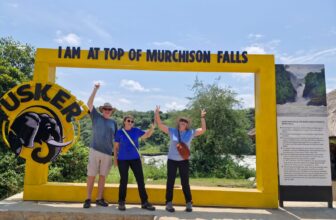
Uganda’s largest national park is home to lions, leopards and smaller cats. Game drives on the northern savannah plains can be combined with a boat safari on the Nile, a visit to the top of Murchison Falls and rhino tracking at Ziwa Rhino Sanctuary.
Lake Mburo National Park
Lake Mburo is a smaller but rewarding park with leopards, servals and African wildcats. Its woodland, rocky hills and open grasslands provide excellent habitats for predators and their prey.
The park is also known for zebras, impalas, elands and giraffes. Visitors can enjoy traditional game drives as well as walking, cycling, horseback and boat safaris.
The Best Time to Look for Wild Cats
Uganda can be visited throughout the year, but the dry seasons generally provide easier wildlife viewing. Vegetation becomes less dense, and animals often gather near permanent water sources.
The main dry periods are usually:
- December to February
- June to September
Early morning and late afternoon game drives offer the best conditions for observing cats because temperatures are cooler and predators are more active.
During the greener months, wildlife may be more widely dispersed, but the landscapes are beautiful, birdlife is abundant and there may be fewer safari vehicles in the parks.
Tips for Seeing Wild Cats on Safari
Wild-cat encounters require patience because these animals are naturally secretive and cover large territories. To improve your chances:
- Begin game drives early in the morning.
- Spend more than one night in important wildlife parks.
- Use an experienced professional safari guide.
- Carry binoculars and a camera with a zoom lens.
- Remain quiet when approaching wildlife.
- Watch for alarm calls and unusual animal behaviour.
- Avoid pressuring your guide to drive too close to an animal.
- Remember that responsible safaris never guarantee wild-animal sightings.
A good safari is not simply about finding an animal quickly. It is about understanding the landscape, following clues and appreciating every part of the experience.
Conservation Challenges Facing Uganda’s Wild Cats
Uganda’s wild cats face several threats, including habitat loss, reduction of natural prey, road accidents, illegal hunting and conflict with communities living near protected areas.
Lions and leopards may occasionally attack livestock, creating tension between predators and local families. Conservation programmes therefore work with communities to strengthen livestock enclosures, improve compensation and livelihood opportunities, promote conservation education and reduce retaliatory killing.
Tourism also plays an important role. Park entrance fees, permits, lodge employment and guided safari activities generate revenue and demonstrate that protecting wildlife can bring long-term economic benefits.
Travellers can support conservation by choosing responsible tour operators, respecting park regulations, avoiding wildlife products and supporting community-based tourism projects.
Photographing Uganda’s Wild Cats
Uganda offers excellent opportunities for wildlife photographers. For the best results, bring a telephoto lens and be prepared for changing light conditions.
Morning and evening light produces warm colours and softer shadows. Photographers should avoid loud noises, sudden movements or asking drivers to block an animal’s path. Flash photography should not be used when it could disturb wildlife.
Patience often produces the best images. A resting lion may suddenly begin walking, a leopard may climb a tree, or a cheetah may scan the plains before starting to hunt.
Plan a Wild-Cat Safari with Ngoni Safaris
Whether you dream of photographing the tree-climbing lions of Ishasha, searching for leopards in Queen Elizabeth National Park or exploring the remote plains of Kidepo in search of cheetahs, Ngoni Safaris can create an itinerary suited to your interests, budget and travel dates.
Our private Uganda safaris can combine wild-cat viewing with:
- Mountain gorilla trekking in Bwindi or Mgahinga
- Chimpanzee trekking in Kibale
- Golden monkey tracking
- Nile boat safaris in Murchison Falls
- Kazinga Channel boat cruises
- Shoebill excursions at Mabamba Swamp
- Rhino tracking at Ziwa Rhino Sanctuary
- Cultural and community experiences
- Photography-focused game drives
We provide experienced English-speaking driver-guides, private 4×4 safari vehicles with pop-up roofs, carefully selected accommodation and personalised support throughout your journey.
Uganda’s cats may be elusive, but that is part of their magic. Every footprint, alarm call and movement in the grass adds excitement to the search. When a lion appears on the savannah or a leopard emerges from the shadows, the encounter becomes a memory that lasts a lifetime.
Contact Ngoni Safaris today and let us design your unforgettable wild-cat safari in Uganda.